
HBS Notes · HBS Prep
Strategy: Breezm
How customization becomes a repeatable business
ClassMon, Oct 26 13:30–15:00 (Boston time) · Strategy · Juan Alcacer · Prep materials
Contents4 sections
Unit 3, Professor Juan Alcacer, Strategy: Breezm: Innovative 3D-Printed Eyewear.
A pair of glasses you wear on your face every day can have the right prescription, a great look, and a badly balanced weight all at the same time. Breezm starts from this very specific discomfort and tries to reorganize how glasses are made and served.
Here goes — enjoy:
Case Summary
Park had worked at an eyewear brand and knew consumers and retail; Sung moved from finance and investment banking into manufacturing, and noticed that glasses are small and relatively high-value — possibly a good fit for 3D printing. Combining this with Humax Optics' manufacturing experience, the two spent a year on research and founded Breezm in South Korea in 2017.
What they care about is fit. Traditional frames are produced first, and consumers then choose from a limited set of sizes; Breezm wants to put facial measurement before production. Customers book an appointment, come into the store for a scan, eye exam and consultation, choose a style, and then an optometrist fine-tunes the fit before the order goes to the factory.
In 2018 the team tested demand with ten pop-up stores, then opened its first permanent store. As the business grew, the company turned fitting adjustments that used to take a professional designer one or two hours into work an optometrist can do in about ten minutes after one day of training. Technology began to change the division of labor in delivery.
The product changed too. Polymer frames are 3D-printed; when it came to titanium products, the team found printing too expensive, so it switched to laser cutting and proprietary hinges. Customers end up waiting about ten to fourteen days to pick up their glasses, and the company offers a forty-five-day guarantee for returns, exchanges or remakes.
By 2022 Breezm had eight stores and sold about fifteen thousand pairs of glasses over the year. The exhibits show revenue of US$4.448 million, up about 55% from the year before; but the operating loss also widened to US$2.901 million. The factory had idle capacity, and the stores still required a lot of consultation time.
The two founders want the company to break even in 2024 and go public in 2027. There are three options in front of them:
- Optimize the existing Seoul operation, improving equipment and store efficiency.
- Replicate stores in other Korean cities, expanding domestic scale.
- Go overseas, looking for bigger markets and different willingness to pay.
The Korean market is about 1.4% of the global eyewear market, so the overseas opportunity is genuinely tempting. The question is whether the next growth map can be carried by the current way of delivering.
My Thinking
The value of customization has to land in how the glasses wear
Customers pay for a better fit; the technology's job is to deliver on that promise. The pressure on the bridge of the nose, the length of the temples, the position of the lenses — these are all differences you can feel in everyday use.
My own take is that the strategic clarity most worth keeping at Breezm is the switch to laser cutting when metal printing didn't make sense on cost. It was willing to change the technology to keep its promise to customers. This also reminds me that when evaluating an innovation, you need to ask: which hassle for the user has actually gone down?
Equipment can be bought; coordination takes time to grow
Breezm's advantage lives in the links between measurement, fitting, manufacturing and feedback. Similar printers can be bought, and material suppliers may serve competitors too, but getting optometrists to do the right fitting faster requires software, training and hands-on experience working together continuously.
The 1,200 measurement points in the case can easily become the hero of the technology narrative. What I'd rather dig into is whether this data reduces remakes, whether it makes the next customer more comfortable, whether it helps new staff become competent faster. Only when it can answer these questions does accumulating data gradually become an operating capability.
Gross margin hasn't yet answered whether the company can make money
Gross margins of about 60% and continuing losses can coexist. Breezm has to pay not just for materials and manufacturing, but also for consultation, R&D, marketing, stores and management. In 2022, SG&A was US$4.475 million, slightly more than full-year revenue.
The early total frame cost in the exhibits is also worth reading closely: the US$313 includes manufacturing, R&D and SG&A, and can't all be called manufacturing cost. Mixing frame prices from different periods, revenue per complete pair of glasses and total unit cost would build the expansion discussion on the wrong numbers.
My own inclination is to first break out, by store and by product, the contribution after deducting the real service and customer-acquisition costs. A busier factory doesn't automatically mean a healthier company.
Replicate the operating results first, then the store count
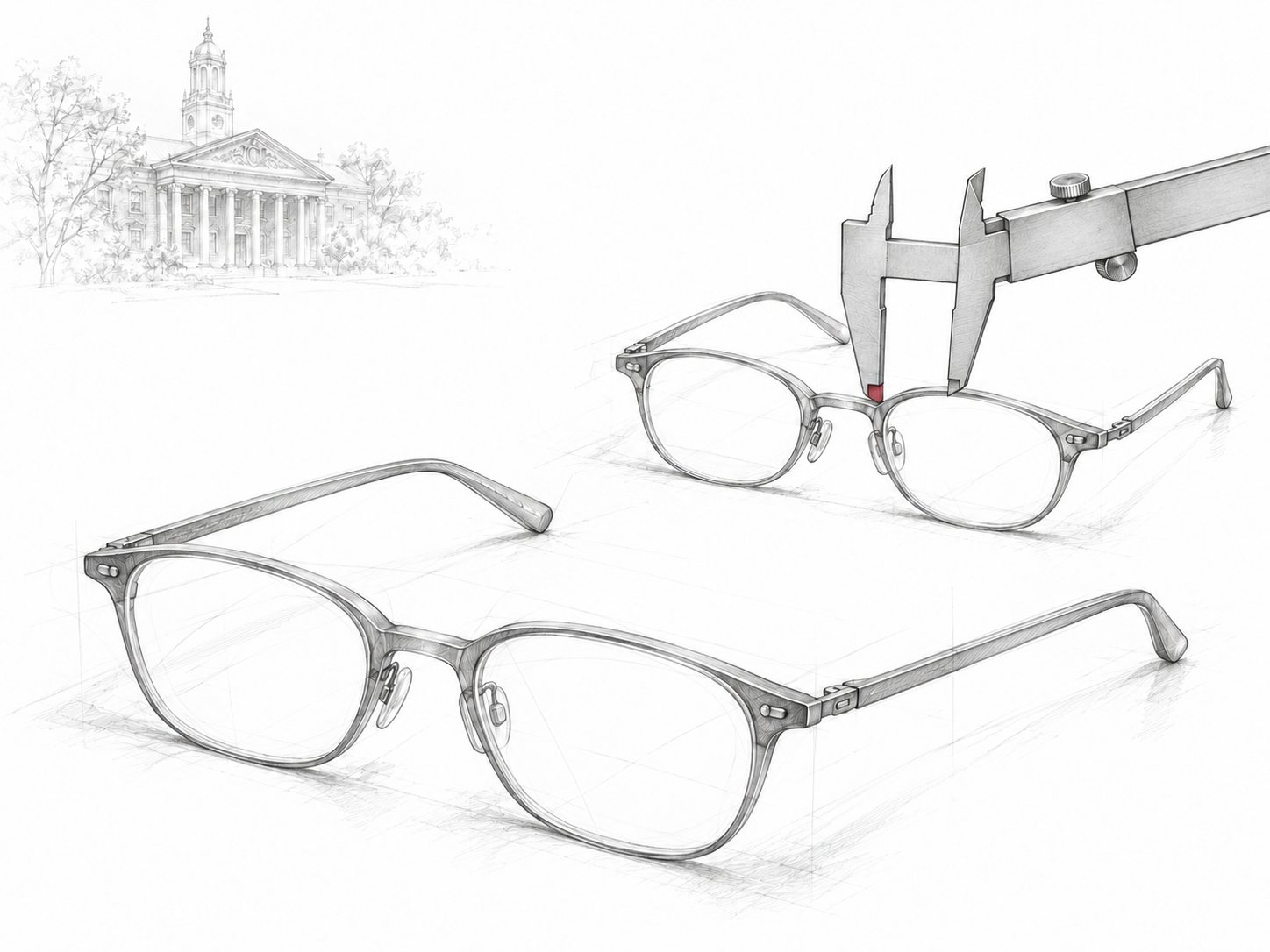
I'd first give Seoul a time-boxed operating test. Can appointments smooth out busy and quiet periods? Can digital fitting raise qualified deliveries per optometrist hour? Will the remake rate rise with volume? Can another team achieve the same results?
Once these questions are answered, replicating one store in another Korean city becomes a meaningful test. Without first defining the operating results to be replicated, the number of stores opened can easily become a good-looking but incomplete metric.
The overseas opportunity is worth keeping, and also needs to be proven on its own
A bigger market needs to be validated separately from customers being more willing to pay. The US eyewear market is far larger than Korea's, but local service, customer acquisition, prescription and return costs will change too. Moving Korea's gross margin to the US and multiplying it by a bigger market size is not an overseas plan.
I'd run low-cost overseas demand research in parallel, looking for groups clearly bothered by standard frames. If paid commitments and local service trials show better economics, then adjust the expansion sequence. Choosing to optimize first may cost you a step; that cost should be acknowledged, not packaged as risk-free prudence.
Takeaways for Arcus42
A customized service needs a result you can explain. I'd rather ask which errors of judgement, rounds of back-and-forth or missed information the service reduced. The more complex the delivery, the more you need to spell out the improvement the client actually gets.
Standardization can protect personalization. Information gathering, basic checks and process records can be reused. That's the only way to save people's time for the questions that are truly different for each family.
Data should record outcomes. Having more material doesn't mean having better judgement. Only by recording how advice was understood, carried out and corrected can it help the next engagement.
Before replicating, test the dependence on individuals. If a service can only be done by the founder personally, scaling up will keep squeezing the same person's attention. You need to first verify whether others can do work of equal quality within clear boundaries.
Before Class
My pre-class choice is to validate the quality of the Seoul operation first, while keeping a small-scale overseas exploration going. For customization to become a repeatable business, different customers need to get the right result, and different teams need to deliver it at an affordable cost.
Once a pair of glasses fits a face, the next question only begins: how do you make that fit happen, reliably, many more times?
This article is a personal study analysis based on a course case; the figures and business situation refer to the period described in the case. It does not constitute an investment judgement on, or an assessment of the current operations of, the company concerned. The expansion sequence and testing suggestions in the text are my personal pre-class views.