
HBS Notes · HBS Prep
Strategy: Golden Goose
How to grow without losing the brand's reason for being
ClassSat, Oct 24 11:00–12:30 (Boston time) · Strategy · Juan Alcacer · Prep materials
Contents4 sections
Unit 3, Professor Juan Alcácer's Strategy course, Golden Goose: Reshaping Luxury.
A company that sells distressed sneakers has grown to hundreds of millions of euros in revenue. The next question is how to keep growing while holding on to the reason customers wanted to walk in the door in the first place.
Here goes — enjoy:
Case Summary
Golden Goose was founded in 2000, bringing together the handcraft of Venice, Italy, with the laid-back style of California. It started out making lifestyle apparel; what really drove the business's expansion was the Super-Star sneaker, launched in 2007.
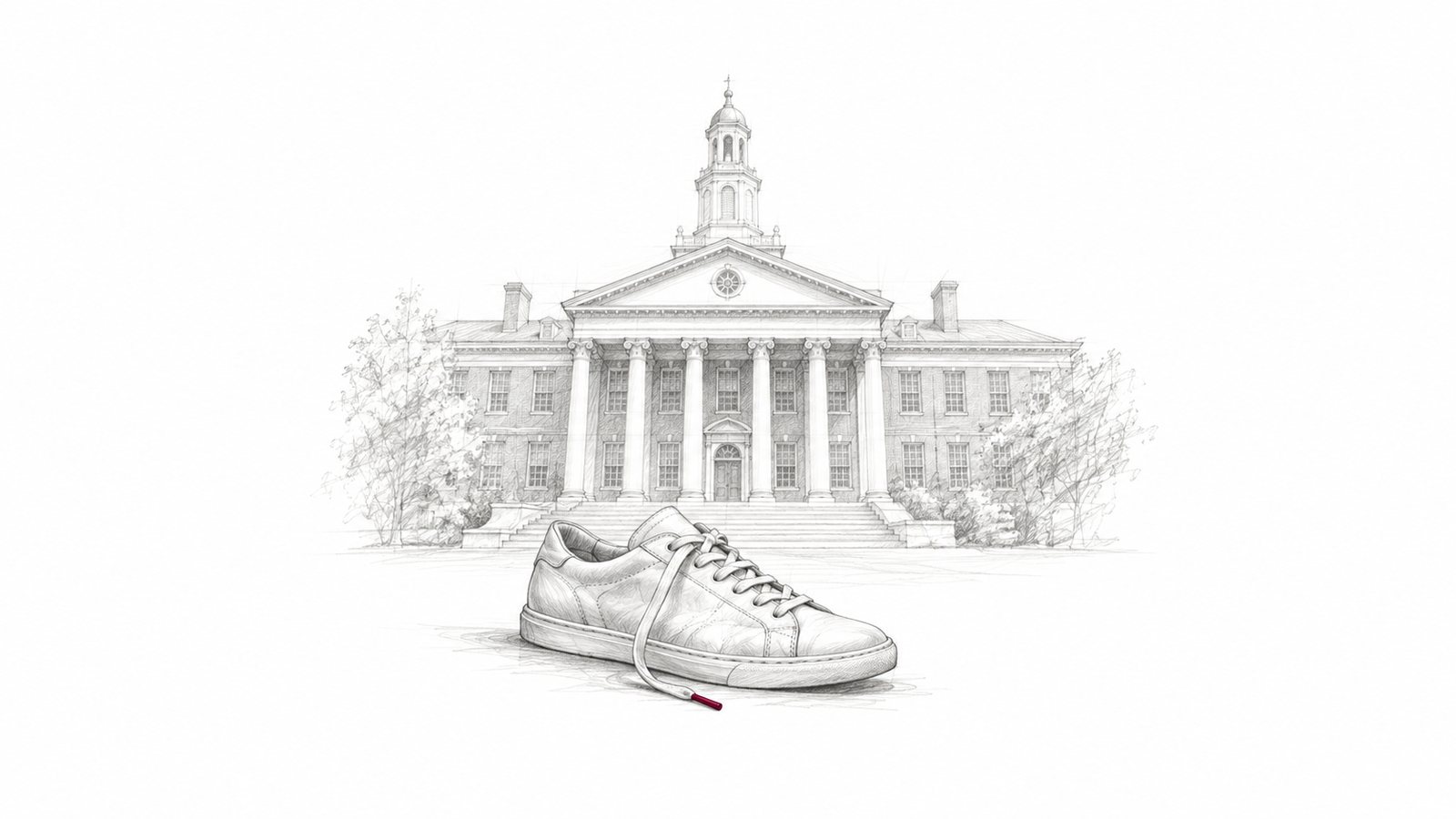
Its shoes look like they've already been worn. Scuffs, fading and wear become part of the design. Traditional luxury often emphasizes carefully preserved perfection; this brand tries to make it easier for people to wear its products into their own lives. A shoe doesn't have to look brand-new forever to be cherished.
Its later development didn't rely on one aesthetic alone. Private equity shareholders came in one after another, and the organization built out functions such as HR, merchandising, marketing and legal. From 2017 the company accelerated its rollout of directly operated stores and brought e-commerce operations in-house. Starting from six directly operated stores, it reached 215 stores by the end of 2024.
In 2019 the brand began offering Co-Creation. Customers choose details together with in-store artisans, turning a pair of shoes into something personal to them. Later it added repair, re-creation, resale and recycling services, and also set up an academy to train artisans. Meanwhile, CRM data was used for site selection, product recommendations, customer outreach and inventory allocation.
According to the case exhibits, 2024 revenue was €654.6 million, with sneakers still contributing about 87% of sales. The company already has ready-to-wear, accessories and kidswear, but there's no obvious answer yet for where the next stage of growth should come from.
There are three paths ahead:
- Expand existing stores, adding more sneakers and co-creation services; co-creation starts at about US$150, and needs floor space as well as skilled artisans.
- Strengthen ready-to-wear and accessories; existing customers know the brand, but whether they're willing to extend that affinity to other categories is something only purchasing behavior can answer.
- Keep entering new geographies; a standard store costs about US$500,000 to US$600,000 to open, and the company requires payback within two years and a target store EBITDA margin of 30%.
My Thinking
What customers buy is more complete than a pair of shoes
Product, artisans, stores and customer data together make up the customer experience. The distressed look is easy to see; the service and learning capabilities behind it are far less visible.
Customers take part in creating, sales staff carefully gather feedback, and the company then uses that information to adjust products and stores. None of these moves exists in isolation. A small number of classic styles provides recognizability, co-creation provides variety, direct retail provides relationships, and data lets those relationships continue.
My own understanding is that to judge whether an advantage can be copied, you have to look at whether competitors can organize the whole set of activities. Imitating a look and building a consistent experience are two jobs of very different difficulty.
Experiences can scale; people's attention has to be cultivated
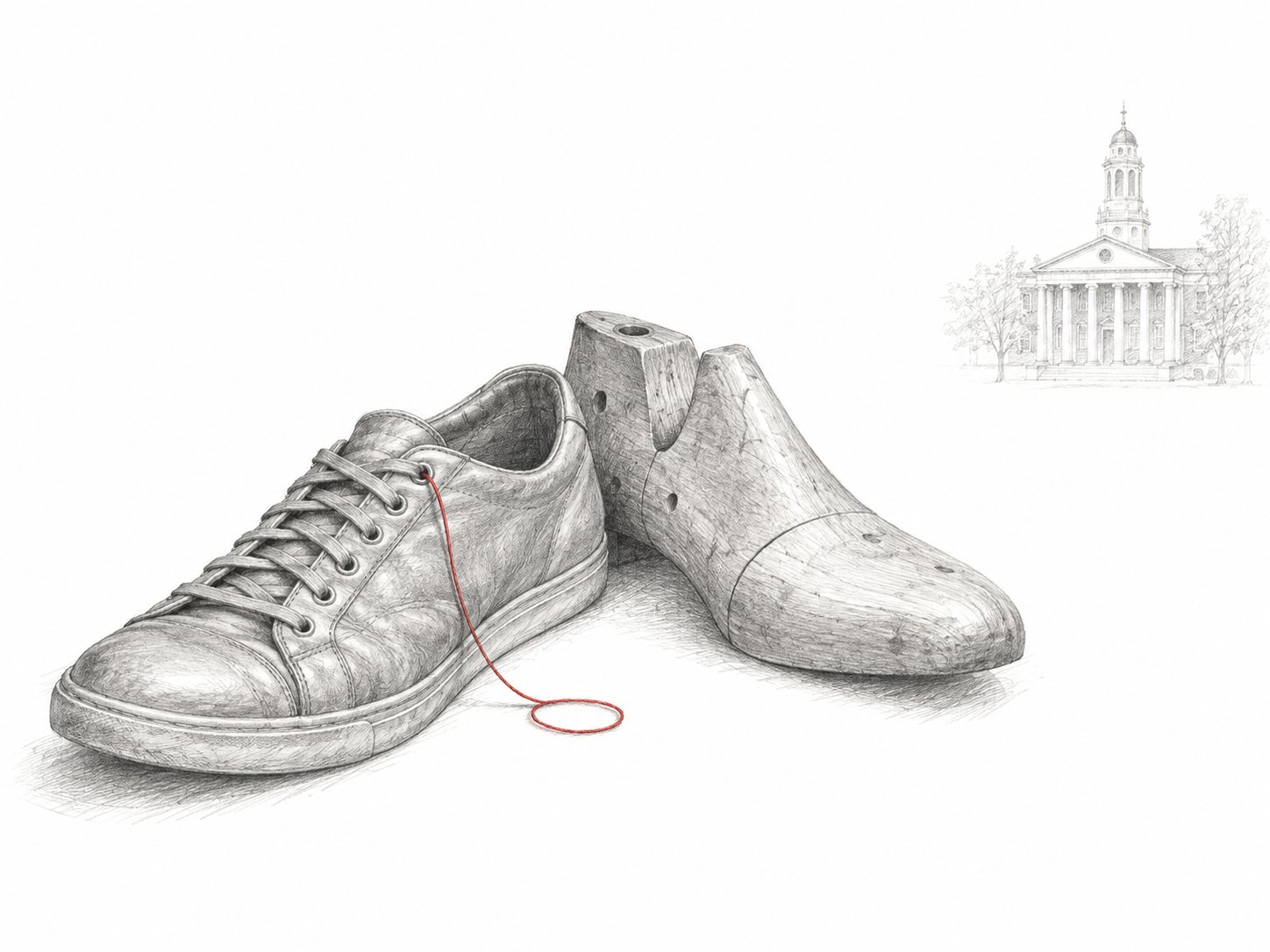
More floor space is easy to put in a budget; more skilled, patient people takes time. The more popular co-creation becomes, the more artisan capability, waiting times and variation in quality deserve attention.
The academy is an important investment because it gradually turns craftsmanship that used to depend on individuals into a capability the organization can sustain. But training shouldn't be imagined as an assembly line that churns out people immediately. And a customer feeling understood isn't the same as a sales associate getting through the full standard script.
Replication should happen at the level of quality standards, training and ways of working together. How each individual expresses things still needs room.
Each new category needs one more reason to buy
Liking a brand doesn't mean being willing to buy everything the brand puts out. A sneaker customer might admire a jacket, but won't necessarily choose it at the same price point.
Ready-to-wear means new design judgment, size assortments, inventory structure and returns risk. Seeing revenue grow and immediately treating it as a mature second growth curve makes it easy to overlook the resources that growth is consuming.
My inclination is to keep experimenting and use existing customers to test real conversion. Full-price sell-through, repeat purchases and inventory turns are closer to the answer than "customers know we make ready-to-wear too."
As revenue moves forward, watch profit and cash too
The quality of growth has to be judged from the relationships between different financial statements. In the case, 2024 revenue grew about 11.5%, but EBIT fell slightly; inventory also grew faster than revenue.
This doesn't directly prove the company has a problem. Store openings, organizational investment and product preparation can all temporarily affect profit and inventory. But it reminds me that a new round of growth can't just hand in a revenue report card.
Store EBITDA margin also can't stand in for the cash payback period. Leases, fit-outs, training and inventory all have to be paid for by someone in the end.
Deepen existing commitments first, then decide where to extend
I would first expand co-creation in stores where demand is already clear, then selectively enter new geographies. Keep ready-to-wear and accessories to small-scale tests, rather than rolling out all three paths at full scale at once.
That means accepting a slower pace of diversification and continuing to carry the concentration risk of the sneaker category. But the benefit is that the company can judge more clearly where new revenue is coming from, which costs have to grow alongside it, and which capabilities can genuinely be replicated.
If bigger stores only bring higher rents and longer waits, co-creation should stay where it fits. If the incremental cash, experience and repeat purchases all hold up, keep expanding.
Takeaways for Arcus42
Let clients help define the outcome. The value of participation is that it helps both sides understand needs and trade-offs more accurately. Personalization on display only becomes meaningful when it enters actual decisions.
Let information change the next interaction. Recording client preferences is only the beginning. It should change when you reach out, how you ask questions, and where people focus their attention.
Count people's capacity as part of growth. Before adding services, look at who will do the new work and how much judgment and communication it requires. An increase in the number of services can't automatically be treated as an increase in service capacity.
Re-validate the reason with every extension. Existing trust gives a new service a chance to be understood, but in the end it's still the client who decides whether it deserves to exist.
Before Class
My pre-class choice is to deepen first, then replicate.
As a business grows, it needs to keep checking: have the details that made customers want to come closer grown along with it?
This piece is based on the HBS assigned case, for my own pre-class learning and management reflection. Figures follow the basis of the case exhibits; judgments stay within the case context and do not constitute investment advice regarding any company involved.