
HBS Notes · HBS Prep
Global Markets: India
How development can reach the many
ClassThu, Oct 22 08:30–10:00 (Boston time) · Global Markets · Carrie Elkins · Prep materials

Contents4 sections
Unit 3, Professor Carrie Elkins, Global Markets, India: The Path to Development.
A country that can already land on the Moon, export software and build a digital payments system at enormous scale still has to answer a plain question: how do these capabilities turn into a life that most people can actually live?
Here goes — enjoy:
Case Summary
The case opens with two different lives on the same day. In the Delhi heat, a white-collar worker with a fever orders food delivery from home and sees a doctor remotely; medicine can be delivered to his door. A delivery worker who is just as sick finishes his shift, walks to the nearby public clinic, and finds the outpatient service suspended. Technology has connected the two of them in the same transaction, but healthcare and social protection still keep them apart.
To understand that distance, you need a longer time frame. The ancient India of the case once connected the Mediterranean, Southeast Asia and China through monsoon trade and the exchange of knowledge. Later, the East India Company moved from trade to taxation and rule, and the colonial administration put order, revenue and the export of resources at its center. Gaps in industry, basic education and public health, together with an elite bureaucracy, became the starting point of the independent nation.
Independence in 1947 came with Partition and mass migration. The new country had to solve not just economic problems but how people of different religions, languages and castes would live together. The 1950 Constitution established a democratic republic, and the first national election faced 176 million eligible voters, nearly 85% of whom could not read. Amid widespread poverty, India chose universal suffrage, and it kept and reshaped the administrative system it had inherited.
Economically, the government built industry through planning, state-owned enterprises and import substitution, pushed agricultural reform, and set up research institutions and elite engineering schools. Food production and technical capabilities accumulated, but companies' entry, expansion and product choices were bound by layer upon layer of licenses. The case quotes Rahul Bajaj recalling the judgment of the ministry in charge: "There is no demand for more than this." Judgments about demand were often made in advance by the approvers, on the market's behalf. At the same time, there were gaps between research, university teaching and industrial application, and basic education and healthcare remained weak.
The 1991 balance-of-payments crisis forced India to change how it developed. Foreign exchange reserves were enough for only a few weeks of imports, and Prime Minister Rao and Finance Minister Manmohan Singh pushed through reforms of the exchange rate, trade, foreign investment and industrial controls. Software and business process outsourcing then expanded rapidly, and companies gained access to much larger markets and capital. But success didn't travel down the same road to everyone: workers lacking the skills and language were hard-pressed to enter high-value-added services, and many remained in agriculture or informal urban work.
Digital public infrastructure began to change some of the costs. Aadhaar digital identity, bank accounts, mobile communications and UPI instant payments were gradually linked up, with successive governments continuing to build them out. According to the case, electronic identity verification cut the cost of onboarding a customer from about $15 to $0.25. A small customer who once wasn't worth serving might, as a result, enter formal financial and commercial networks. But the pandemic also showed that progress in registration, payments and coordination had not closed the gaps in healthcare and job security.
Viksit Bharat 2047 writes the next stretch of road as a national vision: to become a developed, high-income country by the centenary of independence, growing the economy from about $4 trillion in 2025, as listed in the case, to $30 trillion, while improving manufacturing, exports, green development and public services. The three questions the case leaves are therefore linked:
- Going from $4 trillion to $30 trillion, how do you keep creating new productive capacity for 22 years?
- With informal employment still at 88.3% in 2024, how do you make growth bring more stable, more productive jobs?
- While pushing for speed in policy execution, how do you preserve the ability to spot mistakes, respond to different groups and change direction?
My Thinking
History explains the choices — and reminds us to choose again
India's attachment to economic self-reliance has concrete historical roots. Having lived through external control and the extraction of resources, it's understandable that a new nation would want its own food, industry, research and technological capabilities.
The problem is that institutions built for one historical stage change their function in another. Protection can help capabilities get started, and can also let incumbents avoid competition for a long time. An approval system for managing scarce resources may later become a system that limits new supply.
1991 matters because India was still the same India; after the policies changed, companies had a different room for action. That makes explanations like "culture determines growth" or "population is destiny" look too convenient.
My own understanding is that history is most useful in helping us tell apart which capabilities are worth keeping and which arrangements need to end. The openness of ancient trade, the technical accumulation after independence, the later digital public systems — all can become foundations for the next stage. They don't need to come bundled with every layer of the old restrictions.
Development means bringing more people to where productivity is
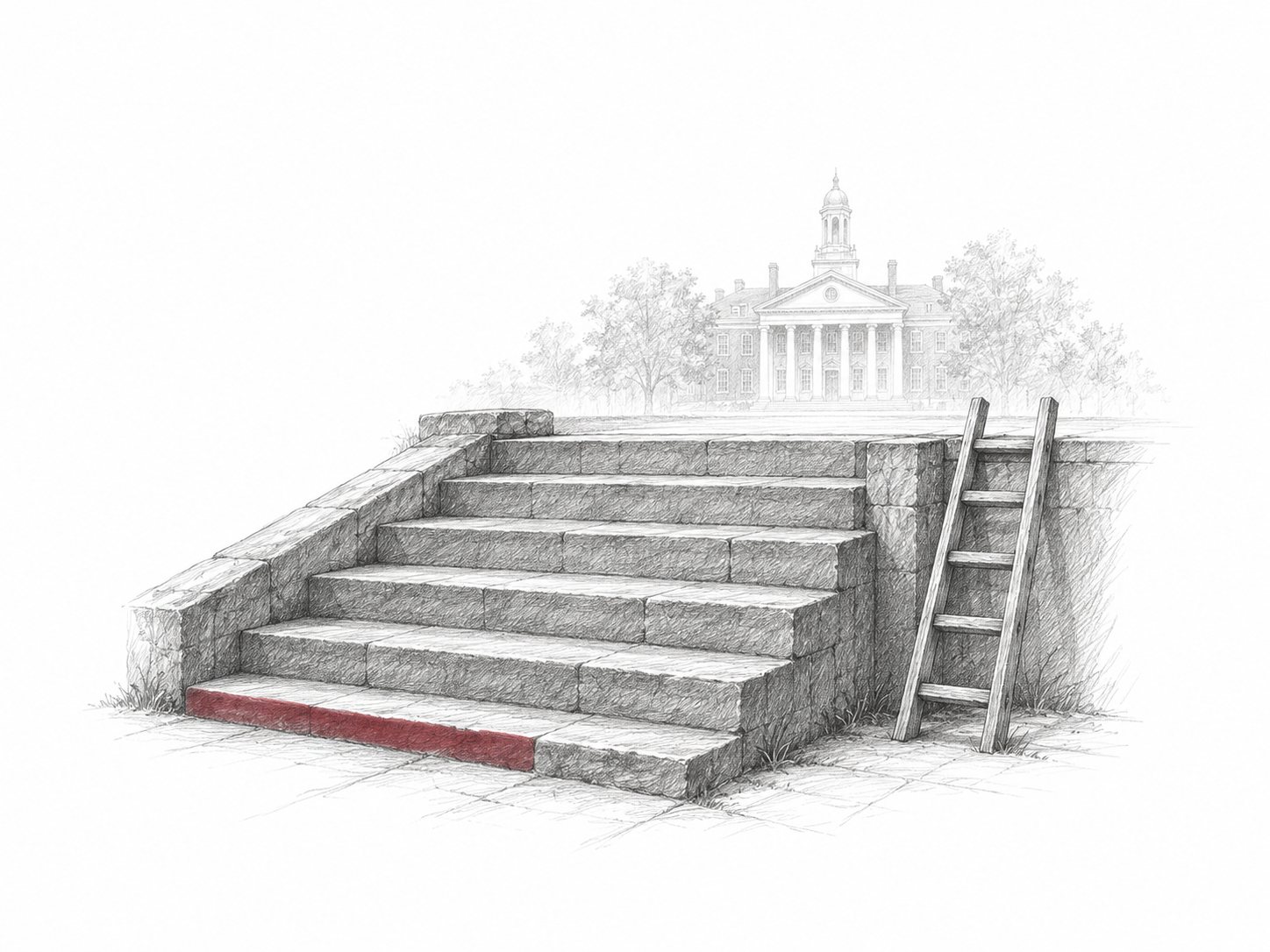
In the case, the unemployment rate in 2024 was about 4.1%, while the informal employment rate reached 88.3%. The two numbers don't conflict. A person can work every day while earning very little, lacking protection, and having no chance to build up skills and capital.
Leaving agriculture does not automatically mean entering more productive work. Walking from the fields to the city may lead into a factory, or may just mean scraping by in a different place.
That's also why I'm reluctant to simply pit services against manufacturing. Services include software, but also logistics, tourism, healthcare and business services; manufacturing can absorb labor, but can also be highly automated. What really needs comparing is: what skills these industries require, how many people they can take in, whether they can raise real incomes, and whether companies have the conditions to keep growing.
My own inclination is that India needs to keep its edge in high-skill services while laying down more upward paths suited to people's actual skill levels. The demographic dividend has to pass through schools, transport, health, childcare and employers before it reaches individuals.
The efficiency of digital systems needs real services to catch it
e-KYC dropping from about $15 to $0.25 is a substantial change. It alters the economics of serving small customers, and lets scattered small-scale transactions be connected.
But identity can be verified online; a doctor can't exist only on a list in a system. Courses can be sent to a phone; a child still needs someone to help them learn to read.
The ASER rural survey cited in the case shows that in 2024, among fifth graders, 48.7% could read a second-grade-level text and 30.7% could do division. This isn't a statistic for all children nationwide, but it's enough to point to a gap in foundational learning.
Access is a precondition; outcomes still have to be delivered. An education system should be judged by what was learned, a health system by whether people got timely and effective care, digital finance by whether it helped business owners improve their real livelihoods.
My own understanding is that technology can amplify existing capabilities, and it also shines a brighter light on the gaps in services. Once it has connected the roads, we still need people, organizations and professional skill to deliver what needs to be delivered.
$30 trillion needs to be broken into several different report cards
Going from $4 trillion in 2025 to $30 trillion in 2047 means growing 7.5-fold, implying a nominal compound annual growth rate of about 9.6% in dollar terms. This is my own calculation from the case's target, and it doesn't mean real GDP must grow 9.6% a year. Prices and exchange rates will both change the dollar size of the economy.
More importantly, total economic size, the high-income threshold and broad improvement in living standards need to be tested separately. The World Bank's income classification is based on GNI per capita, and macro income crossing the threshold can't stand in for judgments about education, healthcare and job quality.
If I had to pick a side before class, I would vote against "on the current path, the full set of goals will be fully delivered by 2047." The conditions for India to keep getting richer are strong, but most workers entering high-productivity jobs, public services becoming reliable, research results entering broad production — these changes still need more solid mechanisms.
This judgment also has conditions that could change it: if learning outcomes, real incomes, female labor participation, growth-stage companies and the quality of local services all improve together for several years running, I would raise my expectations of the goals being met. They can help us judge whether growth has a broader foundation.
I would give priority to foundational learning, primary healthcare, labor-intensive exports, small-business expansion and climate adaptation. The cost is that certain subsidies and showcase projects would have to give way, and the results of reform may arrive more slowly than a single election cycle.
Execution capacity and the capacity to correct need to be built together

The relationship between democracy and economic growth is hard to sum up in a straight line. India experienced low growth under democracy, and also accelerated growth through reform while keeping elections. A regime-type label alone can't explain the change from before to after.
Elections, the media, the courts and public debate can make problems visible and give policies a chance to change. In 1977 voters replaced the government that had declared the Emergency; the turnover in 2004 also suggested that macro performance doesn't necessarily equal how enough people feel about their lives. What these show is a correction mechanism; they can't be taken directly as precise causal proof about GDP.
Democracy can also suffer from short-term handouts, obstruction by vested interests, and majorities excluding minorities. Discussing these flaws is necessary; at the same time we should ask: once power is more concentrated, how are misjudgments discovered, how do those harmed make themselves heard, and how are policies unwound?
Speed of decision only becomes development capacity when it's tied to quality of decision. A society needs a government that can get things done, and also institutions through which real feedback can enter decision-making.
My own inclination is to build public service capacity and accountability together. The differences among India's states, and the local nature of basic education and health, mean that the center's vision ultimately has to pass through many concrete institutions before it becomes part of people's daily lives. Climate pressure will play out in these places too: how long outdoor workers can work, whether the fields have water, whether cities can keep basic services running in extreme heat.
Takeaways for Arcus42
What this country case gives me is a few reminders about organizations and technology. Nations and companies differ in goals, power and responsibilities; what can transfer is a way of looking at problems.
First, measure completing an action separately from creating value. A report finished, a process automated, only shows that an action took place. The better question is whether the people being served understand their situation better, and are more able to make judgments.
Second, give expertise the chance to be used by more people. The outstanding abilities of a few need to reach everyday work through training, a shared language and review. Whether knowledge can be passed on and tested determines how much responsibility an organization can take on.
Third, keep a channel open for dissenting views to enter decisions. Clear responsibility helps action; keeping assumptions visible and reviewing them helps correction. Everyone agreeing quickly doesn't, on its own, prove the judgment is right.
Fourth, let the time technology saves go back into human judgment. Once AI makes drafting and organizing more efficient, we still need to see whether verification is more thorough, understanding deeper, and relationships between people tended to more carefully. High Tech, High Touch has to be delivered in these concrete steps.
Final Words
Before class, I cast my vote for this sentence: the quality of development depends on whether more people gain the ability to improve their own lives.
$30 trillion can be a signpost in the distance. The road leading to it has to be built, stretch by stretch, all the way to people's feet.
These are my personal pre-class study notes. The case narrative and data are based mainly on the HBS case India: The Path to Development (726-012): history and reform in the main text pp.2–12, digital infrastructure pp.12–13, employment and development challenges pp.14–16, learning and employment data in Exhibits 13 and 14. The ASER indicators come from a rural survey; 9.6% is my own estimate of nominal dollar growth based on the case's target. The income classification method follows the World Bank WDI Sources and Methods. The judgments on development and the organizational analogies are my personal thinking and do not constitute investment or policy advice.