
HBS Notes · HBS Prep
Marketing: Starbucks Korea
Who Actually Read That Copy?
ClassMon, Oct 26 15:30–17:00 (Boston time) · Market-Facing Functions · Das Narayandas · Prep materials
Contents4 sections
Unit 3, Professor Das Narayandas, Market-Facing Functions, Starbucks Korea’s Tank Day: When the Machines Forgot.
This was an optional reading. The professor didn't ask us to prepare formally or give us case questions; he just asked us to look at the main text and the first exhibit if we had time.
After reading it, what stuck with me wasn't that AI wrote an inappropriate piece of copy, but an organisational phenomenon the case describes: the content went through approval by several people, yet nobody stopped it in time. The process seemed to have been completed, but no judgement actually took place.
Here goes — enjoy:
Case Summary
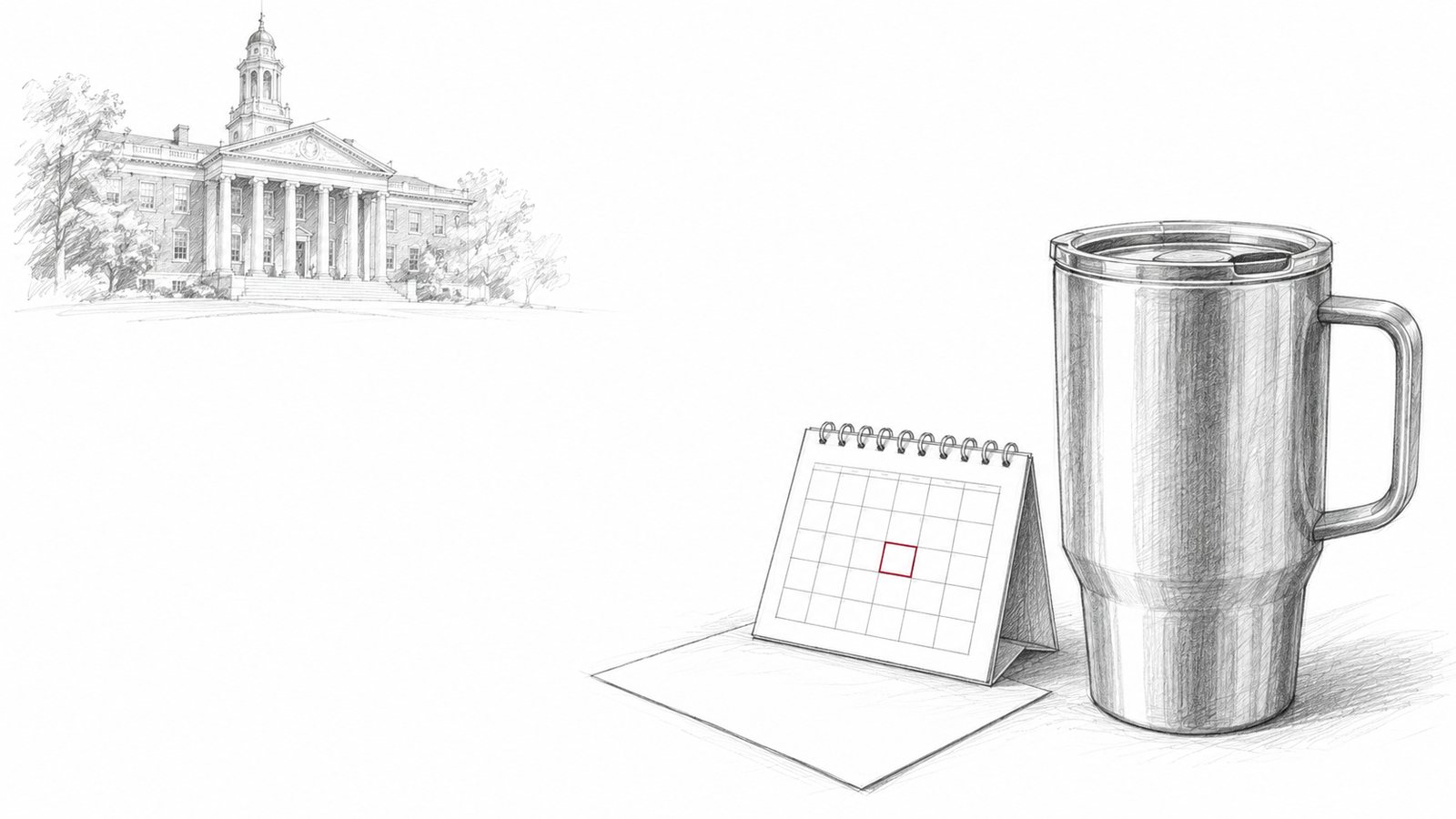
As the case tells it, on 18 May 2026 Starbucks Korea launched a "Tank Day" promotion for a large-capacity stainless steel tumbler. The team used AI to help brainstorm the language, hoping to convey the tumbler's capacity, toughness and memorability, but didn't fully consider what the date and the wording meant historically in Korean society.
18 May is tied to the commemoration of the Gwangju Democratization Movement; and an onomatopoeic expression in the slogan reminded some people of the official cover-up language from another historical event. To the creators it may have been product language; to the people receiving it, it was not a combination that could be understood apart from history.
According to the reports and company statements cited in the case, the approval chain involved seven managers, and some approvers reportedly never opened the attachment. The materials don't include the full prompts or operating logs, so we can't conclude that the tool created all the content on its own, let alone simply divide responsibility equally among everyone. What we can see is that this organisational process failed to identify the problem.
The campaign was halted quickly, but the screenshots had already spread. The case then describes the apology, personnel changes, the public reaction and investigations, and stores nationwide closing early for training in historical and social sensitivity. A marketing decision made at headquarters ended up affecting the store staff who face customers.
The first exhibit places AI applications within the broader marketing system: from identifying needs, designing products and setting prices, to reaching customers, selling, service and fulfilment. That perspective widens the problem. What a company has to judge isn't just whether the copy is good, but what each decision AI takes part in ultimately promises the customer.
My Thinking
Meaning appears where words meet context
Taken on its own, a word can mean strong; placed within a certain date, a certain language and a certain shared memory, it can evoke something entirely different.
That kind of shift is hard to capture exhaustively with a "banned words list." Reviewers need to know where, when and to whom the content will appear. Looking at material divorced from where it will be published is like inspecting only the parts of a sentence without seeing what people will finally read.
AI can help find associations and list potential issues, but asking another model about the same passage doesn't automatically amount to independent judgement. The person responsible still has to understand the audience, and be able to admit what they don't know.
The number of approvers is no substitute for reviewing the content
Seven names sounds very safe. But if everyone assumes the person before them has already checked, a signature can become merely the act of passing information along.
I'd start by asking: what exactly is each approver responsible for judging? Did they see the final version? Did they have enough time? When they're unsure, can they pause the launch?
The answer isn't necessarily to add more layers. A more effective setup might be to have one clearly responsible person check the entire campaign, and, when local culture, factual claims or other sensitive conditions are triggered, bring in someone with real knowledge and authority.
When generation gets faster, attention can become the constraint
Going from a few lines of copy to dozens of candidates can help a team explore, but it also adds to the screening work. If the volume of what gets published grows accordingly while review time stays the same, people's attention gets spread thin.
This isn't a quantified causal conclusion the case offers, but a management risk it helped me see: the drafting time a tool saves isn't necessarily the net time the process saves. Verification, rework, coordination and after-the-fact repair all have to be counted too.
I'd rather ask whether the team can deliver results that are just as reliable, or more reliable, in less time. Higher output alone doesn't prove the work has improved.
Training has to make it into the next real decision
Training in historical and social sensitivity matters. But if, after the training, approval still just means clicking "agree," and the pressure to launch is still greater than the room to raise questions, the same structure may remain.
Knowledge needs a place to be used. For example: campaign materials that clearly list the date, region, audience, final copy and visuals; someone who checks those combinations; a quick channel for raising doubts; a record of what was changed and why.
Repair can't fall on the front line alone, either. Whoever decided on the campaign should take part in explaining and changing things. Store staff need support, not to bear headquarters' mistakes alone in front of customers.
The customer journey is longer than one ad
Exhibit 1 reminded me that AI can also affect prices, offers, service replies, inventory planning and delivery promises. Customers don't necessarily distinguish which team or tool these outputs came from; what they encounter is one and the same brand.
So evaluation can't stop at clicks and conversions. Were the promises kept? Did returns and complaints rise? Were exceptions handled properly? When customers come back, is the experience consistent?
A reply can be very fluent and a promotion very attractive, but if the capability and accountability aren't there behind them, efficiency at the front can turn into disappointment further down the line.
Takeaways for Arcus42
Let the factual basis follow the expression. Next to every important claim you should be able to find its source and the conditions under which it applies, so fluent prose doesn't make uncertainty disappear.
Check the final draft in the recipient's context. Look not only at whether the words are accurate, but at how they'll be understood at a specific time, in a specific relationship and setting.
Make review match real responsibility. Everyone knows what they're judging, and who to go to when they have a doubt. Adding signatures is no substitute for that.
Keep the human ability to handle exceptions. Standard processes can improve efficiency, but when there's a contradiction, emotion or an important promise, you need people who can catch the problem.
Count quality and rework as part of efficiency. How much time you saved has to be looked at alongside how much extra checking, correcting and communicating you did; only then can you judge the real gain.
Before Class
What I'd like to keep discussing is this: when AI makes output faster and cheaper, where are we going to put human attention?
My initial choice is to put it on meaning, evidence, exceptions and promises. Tools can help with drafting, but an organisation still needs someone who has truly read the thing and is willing to take responsibility for the final decision.
This piece is a study summary based on an assigned HBS reading. Related events and reports follow the case's account, and no judgement is made on subsequent investigations; the governance suggestions are my personal pre-class thoughts and do not represent classroom conclusions or the internal practice of any institution.