
HBS Notes · HBS Prep
Operations: Commerce Bank
Service is designed
ClassMon, Oct 19 09:00–10:30 (Boston time) · Operations & Technology · Frances Frei · Prep materials
Contents4 sections
Unit 3, Professor Frances Frei, Operations & Technology: Commerce Bank.
The last piece, on Spyder, asked how ownership rewrites a company's value. This one asks something else: is service excellence designed, or improvised on a Friday afternoon? The story takes place on Halloween 2002 — at a bank that calls its branches stores and its customers fans, and that has just let its managers juggle in the lobby.
Here goes — enjoy:
Case Summary
Halloween 2002, Cherry Hill, New Jersey. A pumpkin, a Dalmatian and a masked Zorro run past Deborah Jacovelli's office door. This is Commerce University, Commerce Bank's full-time training centre. The giant letter C outside the door has been draped in a cape. Jacovelli is the dean here. She has seen plenty of things that don't look like a bank, but one thing this year still unsettles her: a pilot headquarters has just launched, called Retailtainment. Branch managers are free to experiment on Friday afternoons with ways to entertain waiting customers. Free hot dogs, guitarists, jugglers, someone in a letter-C costume on roller skates. Some stores have already had incidents. A hot dog cart caught fire, a juggler got burned, and it made the local news.
Vernon W. Hill II opened this community bank in southern New Jersey in 1973 with US$1.5 million. His judgement was blunt: the world doesn't need another me-too. With no capital and no brand, he had to find a point of difference. For nearly thirty years after that, Commerce made no acquisitions, opening its own stores into Pennsylvania, Delaware and New York. Hill called branches stores, and benchmarked against Starbucks and Home Depot, not the bank next door. He asked: how does Starbucks get you to pay US$6 for a cup of coffee? The retail experience. Since 1990, the stock had risen twentyfold. CFO Douglas Pauls has a line on the cover of the case:
The hardest thing about becoming a big bank is not becoming a big bank.
The hard part isn't growing up. It's growing up without turning into a big bank.
The industry at the time was working a different problem set. Deposits and loans were both treated as commodities. From 1998 to 2001, industry deposits grew by about 19% in total, with loans running at nearly 90% of deposits; the outsized growth of the big banks came almost entirely from acquisitions. Banks tiered customers by profitability, and satisfaction stayed chronically low — 79% of credit union members were "very satisfied," against just 53% at retail banks. Attrition could run as high as a third of customers a year; even the best lost 15%. Of those who left, 34% did so because of fee surprises, poor service or errors, 34% because they moved beyond the branch network, and 15% because somewhere else was more convenient or open longer. Electronic channels had low marginal costs, and most banks actively pushed people away from the teller window to self-service: with advertising, with rewards, occasionally with penalties — US$3 to use a teller.
Commerce turned that whole logic on its head. Stores opened 7:30 a.m. to 8:00 p.m. on weekdays, and on weekends too; busy drive-throughs could stay open until midnight. There was also a 10-minute rule: open 10 minutes early, close 10 minutes late. There were only four kinds of checking account, and opening one came with a gift. Hill said other banks, because branches are expensive, push people out and onto the web — "You can't find a successful retailer that survives by pushing people where they don't want to go." Their model was to make every channel the best it could be, and assume you'd use them all. The result wasn't just deposits growing far faster than the industry — up 37.5% in 2001, against 5.1% for the industry — but online usage of 34%, higher even than Wells Fargo. The average store had 40,000 visits a month; busy ones had 100,000. A McDonald's gets about 25,000.
What they sold wasn't loans; it was core deposits. Hill said a bank's value isn't in its loan book, it's in the money that didn't come for the rate. Commerce was usually the lowest-rate payer in its markets, often by 50 basis points. Asked why they'd opened a new account, 3% of customers said for the highest rate; 62% said for service and convenience. Competitors fought over the 3%; Commerce fought for the 62%. Its expense ratio looked ugly as a result. Hill's reversal: a low expense ratio is a negative, not a positive — banks with low expense ratios are disinvesting in their own business every day. Money saved didn't go to the bottom line; it went back to customers. Switching ATM contracts saved several million, which they used to abolish card fees company-wide; in New York, when someone else's machine charged you US$1.50, they refunded it. Loans were a supporting act. The loan-to-deposit ratio was 45%, against 87% for the industry. The policy was one sentence: no deposits, no loans. The loan officer was the store manager. At some point you'd have to come into the store to sign — and that was the moment to persuade you to bring your deposits over too.
Stores were built as replicable machines. Built from scratch for about US$1 million: white brick, black metal roof, black-and-white marble, lollipops and dog biscuits. Hill said, we know every screw in the model. Payback took 12 to 18 months; the industry needed three years. When it rained, staff walked customers to their cars under umbrellas. They gave away 300,000 pens a month. A phone next to the ATM connected to the call centre. Online, you could see both sides of your cheque the next day. When other banks began refusing large amounts of coins or charging for them, Hill spent US$10 million on the Penny Arcade — coin-counting machines. In 2001 they handled 750,000 transactions and took in US$71.7 million in coins, free to customers and non-customers alike. Falese called it Marketing 101: once they're in, keep doing it.
WOW was an operating system. In 1994, nine people wrote the SMART principles: say Yes to customers, make everyone feel looked after, keep your promises, know how to recover, think like a customer. Commerce University had 41 full-time staff. New hires went through Traditions, which taught smiling, handshakes and greetings — "smile with your teeth." For 40 positions in Manhattan, they interviewed 2,000 people. There were 14,000 mystery shops a year; saying "may" instead of "can" cost you points, and raises depended on the scores. Kill a stupid rule and you got US$50. Trainer John Manning told a roomful of bank officers: we hire wack jobs. You're all wack jobs. Your responsibility is to go out and find more.
Retailtainment was the next step in 2002. Competitors had started copying the basic service. Washington Mutual entered New York with its "un-bank": roving tellers, kids' corners, no desks. Dutch ING opened café-style branches in Manhattan. Bank of America was experimenting with televisions in the queue. Pauls said: we need the next penny arcade. Yet one of Jacovelli's friends said the greetings and free pens were all lovely, but she'd rather that person got behind the counter and moved the line along. Another customer complained there were too many greeters standing around. On one side: managers know their customers best. On the other: total laissez-faire is dangerous. Jacovelli's summing-up: Commerce is a bank and a brand, and it succeeds or fails on whether its service beats its competitors'. The question is what role Retailtainment plays in that mission.
The four questions in front of Jacovelli:
- Before Retailtainment, how well did this service delivery system mesh with the competitive strategy it supported? Which design choices mattered most?
- What problem is Retailtainment trying to solve? Has it succeeded? If it should change, what should change?
- How should competitors have responded to Commerce's entry?
- Which lessons from the rise of online banking still apply in the age of AI?
My Thinking
The operating model and the strategy have to bite on the same screw
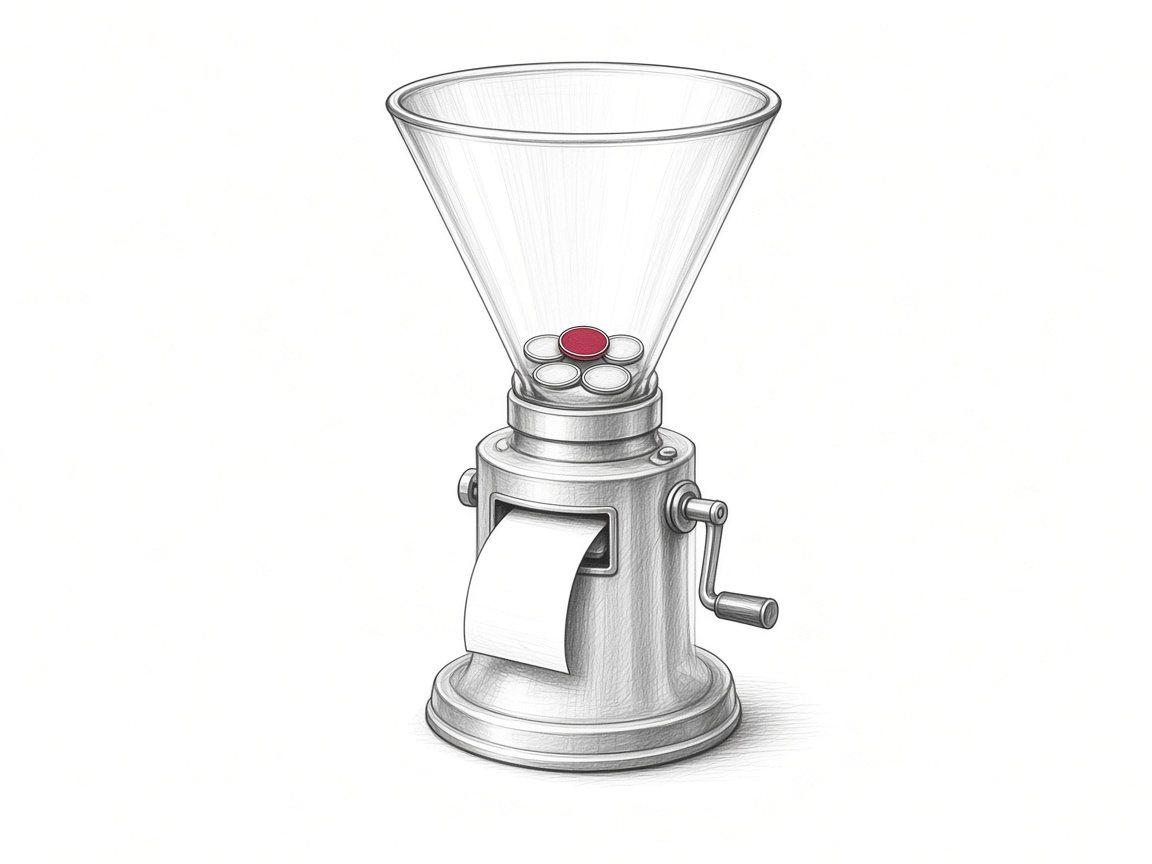
Commerce is not a better bank. It's a retailer that happens to take deposits.
The strategy is one sentence: win on service and convenience, not on rates. That 62% versus 3%. Every design choice grows towards that sentence — 7:30 a.m. to 8:00 p.m., weekends, midnight drive-throughs, the 10-minute rule; four kinds of checking, not a dozen; deposits and loans both credited to the store; no deposits, no loans; 14,000 shops a year, raises tied to scores; never pushing people away from the counter. Hill said that even if not a single person came in to do business on a Sunday, opening on Sunday would still make sense, because it says: I'm always here.
The fit shows up in the income statement. An efficiency ratio of about 70% against the industry's 60% — they were more expensive, just as promised. Cost of interest-bearing deposits of roughly 2.4% against 5.4%. Return on equity was still higher, 15% against 12%. Net income doubled in four years while the industry grew by a fifth. Deposits grew 37.5% in 2001, against 5.1% for the industry. This operating system isn't decoration on the bank. It is the strategy, running.
The 45% versus 87% loan-to-deposit ratio is the same screw. The spread they earned wasn't enough to buy credit risk. Falese said some of our best loans are the ones we didn't make. Securities made up 40% of assets, against less than 20% for the industry. They were a deposit-gatherer that made a few loans, not a lender with branches. Take away the hours, the short menu, the store getting credit, the "we won't push you out," and the 62% story starts to leak. Retailtainment isn't on that list.
My own reading is that when Frances Frei calls this class Service Excellence by Design, "design" isn't about aesthetics. It's what trade-offs look like once they've been written into process. Excellence isn't doing a few more good things. It's a set of things you refuse to do.
The WOW that's really worth something is replicable design
The Penny Arcade and the hot dog cart are two completely different kinds of innovation.
The coin machine solves a job competitors refuse to do. Other banks started saying no to large quantities of coins, or charging for them. Hill put down US$10 million: pour them in, get a receipt, swap it for notes, free for customers and non-customers alike. In 2001, 750,000 transactions, US$71.7 million. Falese said: once they're in, keep doing it. The umbrellas, the 10-minute rule, the phone beside the ATM, the cheque images you can see the next day — same category. Designed once, copied in every store, checkable by mystery shoppers, solving real problems: rain, opening hours, coins, whether a cheque has cleared.
The hot dog cart solves "make it look like something's happening." So does the guitarist. So does the letter-C costume on roller skates. They can't be replicated as the same screw, and they can't be measured by 14,000 shops. Some stores will become something fans talk about; some will make the news. Commerce spent thirty years turning white brick and black roofs into an identity customers recognise with zero learning cost, and the first thing Retailtainment loosens is exactly that.
My own leaning: if WOW can't be written into a script, it isn't operations yet — it's just personality. Personality is charming in one store and a risk across 185. Pauls said the hardest thing about becoming a big bank is not becoming a big bank. Identical stores, Traditions, killing stupid rules — that's an attempt to turn personality into a system. Friday improvisation hands the system back to personality.
Retailtainment solved the wrong problem
What it was trying to solve wasn't the queue. It was anxiety — competitors had started copying the easy layer: evening and weekend hours, warm-and-fuzzy ads, cafés, televisions in front of the line. Pauls wanted the next penny arcade. That's understandable. The bank deliberately pays less interest; once the service gap is closed, those 50 basis points become a reason to leave.
But the case offers no numbers for success. No lift in deposits, no drop in perceived waiting time, no mystery shop scores. What it does have are idle greeters, a friend who wishes the line would move, and a fire. With 40,000 to 100,000 visits a month, the bottleneck is tellers, not atmosphere. Juggling while the line stands still is strategy and operations contradicting each other.
My own choice: shut down Retailtainment as Friday variety hour. Keep the search for "the next coin machine," and do it the way they already know how to open stores — one idea, scripted jointly by marketing and operations, piloted in a few stores, with safety checks and a rule for killing it. The hot dog cart had been approved by marketing, and it still caught fire. Approval without a script is not control.
One line for Jacovelli: send the greeters back to the counter first, then talk about guitars.
Competitors shouldn't copy the lobby
They copied the lobby. Washington Mutual's kids' corners, ING's espresso, Bank of America's TVs. What they copied was the layer Commerce could swap out next Friday.
Money-centre banks shouldn't play on this field. Hill said this delivery model can only be built from scratch; mergers, at bottom, are about cutting costs. He said "every big bank merger in this country has failed" — that's his sentence, not history's verdict. The direction is clear, though: you can't retrofit a service cult into an institution that has just finished merging. By 8:15 in the morning, Robbins had already walked across the street from Citibank to Commerce. Her former employer didn't lose her for want of a coffee machine.
If you insist on competing for the 62%, what you should copy is the trade-offs: the hours, the short menu, crediting deposits to the store, your own university, fourteen thousand shops a year of your own, paying less interest and framing it as the price of the experience, accepting a higher expense ratio, and not closing branches to save costs in cities where Commerce is opening stores. Commerce gave employees US$5,000 when competitors closed branches. That's the clue. Your exit is their marketing.
The response that looks fierce but is actually weak: open on Sundays too, install another coffee machine. The response that looks passive but is actually hard: pick a different axis of excellence, and stop pretending you're competing on service while the economics still require pushing people into a phone tree.
My own reading is that most boards would reject a five-year rebuild. That rejection is itself a response — cede the service segment and harvest the 3% who want rates. Pretending to respond does more damage to the brand than not responding at all.
Don't push people where they don't want to go
The story of online banking in this case isn't that digital won. It's that banks used a new technology to push customers where the bank wanted them to go, while Commerce used the same technology to follow customers to where they already were — and ended up with higher digital usage, not lower.
The industry advertised ATMs and websites and occasionally charged US$3 to visit a teller. Commerce said every channel should be good. Online usage of 34%, higher than Wells Fargo, alongside tens of thousands of store visits a month. An expensive channel that's loved brings the cheap channel along as a complement; an expensive channel treated as a dumping ground takes both down with it. That's the most underrated number in the whole case.
AI will rhyme with this. Self-service, chatbots and all-digital relationship managers will look free at the margin, just like websites in 2002. If you push people there to save on staff, that's the US$3 teller fee all over again. The phone Commerce installed next to the ATM is the right posture — new technology that makes it easier to reach a person, not harder. So are cheque images that appear the next day. High Tech in service of High Touch, not a replacement for it.
The gimmicks will still arrive first. Retailtainment is 2002's "we should have an AI demo on Fridays." The Penny Arcade is 2002's real workflow. You still can't be excellent at everything. Commerce was excellent at convenience and ordinary-to-weak at rates and credit. AI can't lift trade-offs away. Use it to be cheapest, warmest and most comprehensive all at once, and you'll get a bot that can apologise in the jargon of four product lines.
My own reading: write the script first, then let the machine copy it. Consistency is what scales. Treating personality as the exception is Friday juggling at software speed. Killing stupid rules is still human work.
Takeaways for Arcus42
Reading about this bank that calls its branches stores, what comes to mind isn't whether we should be warmer, but whether our operating system bites on the same screw as our strategy.
First, don't push people where they don't want to go. The online banking lesson still holds for AI. Technology should thicken the meeting — memory before it, a second pair of eyes during it, the record after it — not turn the meeting into a turnstile you have to pass through first. Digital channels that people follow you into are the ones that stick.
Second, keep the menu short so the front line can be warm without getting things wrong. Commerce had only four kinds of checking. The industry had a dozen or more, and after mergers forced customers to switch products. Once the breadth of service exceeds what the delivery system can hold up, warmth turns into errors. Before adding one more "we can do that too," ask first: is it still the same screw?
Third, the real wow is replicable design, not an improvised show. Umbrellas, coin machines, the 10-minute rule solve jobs competitors can't be bothered with. Guitars solve "make it look like something's happening." Family services have both kinds too. The former deserves to be scripted, the same in every "store." The latter makes the news.
Fourth, incentives have to face the same way as the strategy. Deposits are credited to the store; raises depend on shop scores. If credit goes to the product and the relationship is left to the front line, the front line will hate the product — Fleet already acted that out in the case. Whoever serves, books it. The write-up after every real delivery is our mystery shop.
Fifth, copying the theatre is not a response. Competitors copied the lobby. What they should copy is the trade-offs, or openly switch to competing on another axis. For an institution whose product is trust, the most expensive pretence is this: the script already sounds like Nordstrom, while the scorecard still counts visits.
In Closing
Before class, the line I agree with most is: "Don't push people where they don't want to go."