
HBS Notes · HBS Prep
Innovation: Now Is the Time for Courage
Courage is a skill you can practice
ClassFri, Oct 16 11:00–12:30 (Boston time) · Innovation · Ranjay Gulati · Prep materials
Contents4 sections
Unit 3, Professor Ranjay Gulati, Innovation: Now Is the Time for Courage: Five strategies to drive bold action amid uncertainty.
This is the third reading in Professor Gulati's unit. The previous one, Roaring Out of Recession, was about "what" progressive companies do in a downturn — save on processes, invest in customers. This one steps back and asks a more fundamental question: plenty of people know what they should do, so why do so few dare to do it? His answer is that courage isn't a personality trait; it's a skill you can break down and practice.
Here goes — enjoy:
Case Summary
The article begins with a finding the author himself didn't see coming. During the 2008 financial crisis, Gulati and his colleagues studied how 4,700 public companies had navigated the three previous recessions. They found that about 9% of companies came out of each recession stronger than they went in — not just because they cut costs cleverly, but because at the same time they took calculated risks to invest in growth. As he puts it, they had "inadvertently documented the enormous difference that courage makes in business." For the next decade and more, he turned to a different question: faced with the same hard situation, why do some leaders dare to move while others don't?
He starts by defining courage: the willingness to take bold, risky action in pursuit of a purpose you believe is worthwhile, in the face of persistent fear. Then he quotes Mandela — courage is not the absence of fear but the triumph over it. From Socrates and Aristotle to Mencius, philosophers have long argued over whether bravery is an innate virtue or something that can be taught; modern research in psychology, neuroscience and medicine supports the latter: many people who never thought of themselves as brave have shown bravery when the situation demanded it. But almost no one has systematically studied "how a person can become braver." So, drawing on the literature, archives and more than 200 in-depth interviews, he put together a playbook.
He draws a line. Many experts say the way to overcome the anxiety that uncertainty brings is risk management — treating bold action as a "smart bet" built on careful weighing of the odds. Running a cost-benefit analysis does indeed lower the odds of a bad outcome. But the economist Frank Knight long ago distinguished between two things: what you can assign probabilities to is risk; what you can neither enumerate nor estimate is uncertainty. In the face of the latter, most people feel a loss of control, which triggers fear, and then they either freeze or retreat. What sets brave leaders apart is that they can take back the initiative and choose a third response. At the time of writing, 76% of S&P 500 companies had mentioned "uncertainty" on their earnings calls, up from 37% three months earlier.
Then come five strategies, each with three practices.
First, build a positive narrative. Start by "hunting for risks" — not driving risk to zero, but identifying the unknowns one by one so the world looks more orderly. BlackRock's Larry Fink built his entire career on this: his first employee was tasked with developing a comprehensive risk-assessment platform, which came to be called Aladdin and became the industry standard in finance. In his 2025 annual letter, he pointed out that US$25 trillion was sitting idle in US banks and money market funds, while the world would need about US$68 trillion in infrastructure over the next 25 years — numbers that gave management the confidence to make three big acquisitions in a row at the end of 2024. Next, "find a moral purpose." In 2014, CVS's Helena Foulkes and her team decided to stop selling tobacco, giving up US$2 billion in sales:
"We debated it for a long time, and not everyone agreed... It was scary to walk away from such a big piece of the business. But we had 25,000 pharmacists at the time. For them, and for all of us, working at a company that made such a bold decision really created a sense of pride."
Finally, "draw on faith." Research shows that entrepreneurs spend more time praying than the average person, and that people who believe they'll have good luck have a stronger sense of agency. Former PepsiCo CEO Indra Nooyi kept a statue of Ganesha in her office: when the pressure became unbearable, she would close her eyes and picture a temple, and "suddenly I felt I could take on the world."
Second, cultivate confidence. Confidence comes from what the psychologist Bandura called self-efficacy — "your belief in what you can accomplish across a range of situations with the skills you have." Practice one is deliberate training. Sully Sullenberger's pilot training had no lesson on "ditching in the Hudson after a dual engine failure," but as he said: "I had been preparing for that moment my entire life." GE's Larry Culp drew on the lean skills he'd honed over 25 years at Danaher to complete GE's turnaround. Staff at the Taj Mahal Palace hotel in Mumbai held their posts during the days of the 2008 terrorist siege — every one of them had been through an 18-month onboarding program that taught not just the job but the "guest first" culture. Practice two is building a big toolkit: NASA astronauts say boot camps that teach mental endurance are as useful as technical training; Foulkes's team's tool was transparent debate, "letting people say what they were excited about and what they were nervous about." Practice three is focusing on what you can control. In sports this is called "process over outcome"; football coach Nick Saban told his players: "We don't talk about what we're going to achieve; we talk about how we're going to do it." Aloke Bajpai, founder of the Indian online travel agency Ixigo, ran out of money at least four times; each time the founders put their own money back in and took subsistence salaries, and employees took pay cuts — "and most importantly, we kept shipping products."
Third, take small steps. Many people equate boldness with big moves, but the leaders the author studied probed with small steps before they leaped — what the organizational psychologist Karl Weick calls sensemaking. When the 2011 tsunami hit Fukushima, Naohiro Masuda, the head of the Daini nuclear plant, faced 55-foot waves crashing into a plant designed for just 17 feet. He and his team gathered around a whiteboard, wrote down the data they had, and analyzed what might go wrong. After the main control panels failed, he sent people out at personal risk to inspect the equipment on the ground, and on that basis hypothesized that the cooling systems had lost power. They first tried to draw power from the only building on site that still had electricity; that proved technically too difficult, so they switched to the only generator still working; after judging that another reactor was in greater danger, they shifted their work there. Small steps, observe, learn, iterate — and in the end they averted disaster, which the Daiichi plant a few kilometers away did not. Amazon calls decisions like these, which you can walk through and back out of, "two-way doors."
Fourth, find connection. Contrary to popular belief, lone heroes are rare. Chanel CEO Leena Nair says that when people questioned her abilities as a woman and as a leader with an HR background, she would think of the women in her family whose own ambitions had been suppressed but who had great faith in her — "they would say, let Leena have that chance." Her mentor Nooyi told her not to think about her limitations but about what she could bring. Bajpai had bridge funding from investors; Facebook whistleblower Frances Haugen had two support organizations behind her. And you can't surround yourself only with cheerleaders — one of former LEGO CEO Knudstorp's mottos was "listen to the complainers," and Culp is known for walking the shop floor to hear directly from frontline workers.
Fifth, stay calm. Sleep, nutrition, hydration — "you can't think clearly when you're running on empty." As Nair puts it: "Put on your own oxygen mask first." Rituals: every morning Steve Jobs looked in the mirror and asked whether, if today were the last day of his life, he'd be happy with what he was about to do; Bernanke kept Greenspan's habit of always facing the clock in Fed meetings. And reframing — imagining the situation in three versions: pessimistic, realistic and optimistic. Fink wrote in his annual letter: "We've been through moments like this before. Somehow, over the long run, we've always figured things out."
It ends with a judgment. This is not to say leaders should take excessive risks, "but most of us tend to be too timid rather than too reckless." Bravery is a skill every businessperson must learn — and teach to others.
The professor's three questions for this session:
- What does courage mean to you?
- Can courage be learned? If so, how?
- How can organizations become braver? What can leaders do?
My Thinking
Courage begins where the spreadsheet runs out
Knight's line is the first thing in the whole article I want to make clear.
Risk and uncertainty are not the same thing. Risk is when the probabilities can be calculated — a new product's failure rate, whether an acquisition's synergies will materialize, whether a client will renew. What these call for isn't courage but good analysis. Do the analysis thoroughly, then decide: that's prudence, and prudence is a skill, not cowardice.
Uncertainty is something else: the outcome itself is unknown, and you can't even list everything you should be afraid of. At this point analysis stops, because it can't give you an answer. Most people's reaction here is instinctive — freeze, or retreat. Courage doesn't replace analysis; it takes the baton once analysis has run its course.
Fink's story demonstrates this sequence very cleanly. Aladdin calculated everything that could be calculated; the US$25 trillion and US$68 trillion in the annual letter were calculated figures. The three big acquisitions were the step that came after the calculations ran out. Only once you've calculated everything you can does courage earn its place on stage — reverse the order and it becomes recklessness.
My own take is that this line matters especially for those of us with "good training." Business school teaches you to turn everything into something that can be analyzed, which is great, but it can also lead you to believe the analysis can go on forever. It can't. There's always a moment when the last row of the spreadsheet is blank and the decision still has to be made. Recognizing that moment is the first step of courage.
The fear stays put; the test is whether you moved
In Gulati's definition of courage, I'd underline two phrases: "risky" and "persistent fear."
Risky means the cost is real. CVS gave up US$2 billion in sales to stop selling tobacco; Haugen gave up a well-paid job. If you aren't putting anything on the line, that's not courage, just an opinion. It's also why I don't really trust "bold statements" that cost the speaker nothing — what separates them from courage is the bill.
Persistent fear means the fear doesn't go away. Foulkes said walking away from such a big piece of the business "was scary," and then they did it anyway. The article is careful here: the goal isn't to stop being afraid, but to act while the fear is still in the room. So courage isn't a feeling; it's an observable behavior: did this person move, or not?
Defining courage as a behavior rather than a feeling has a very practical benefit — it becomes something you can practice. You can't practice a feeling, but you can practice a behavior. You don't need to become someone who isn't afraid first; you just need to do the thing while you're afraid. Do it once, and the second time is different. Sully's training didn't have that lesson, but he'd been flying his whole life; the Taj staff weren't hired for heroism — they went through 18 months of onboarding and then, in those few days, "fell back on their training." What looks like character from the outside is built through repetition.
Bold doesn't mean big; bold means early, and reversible
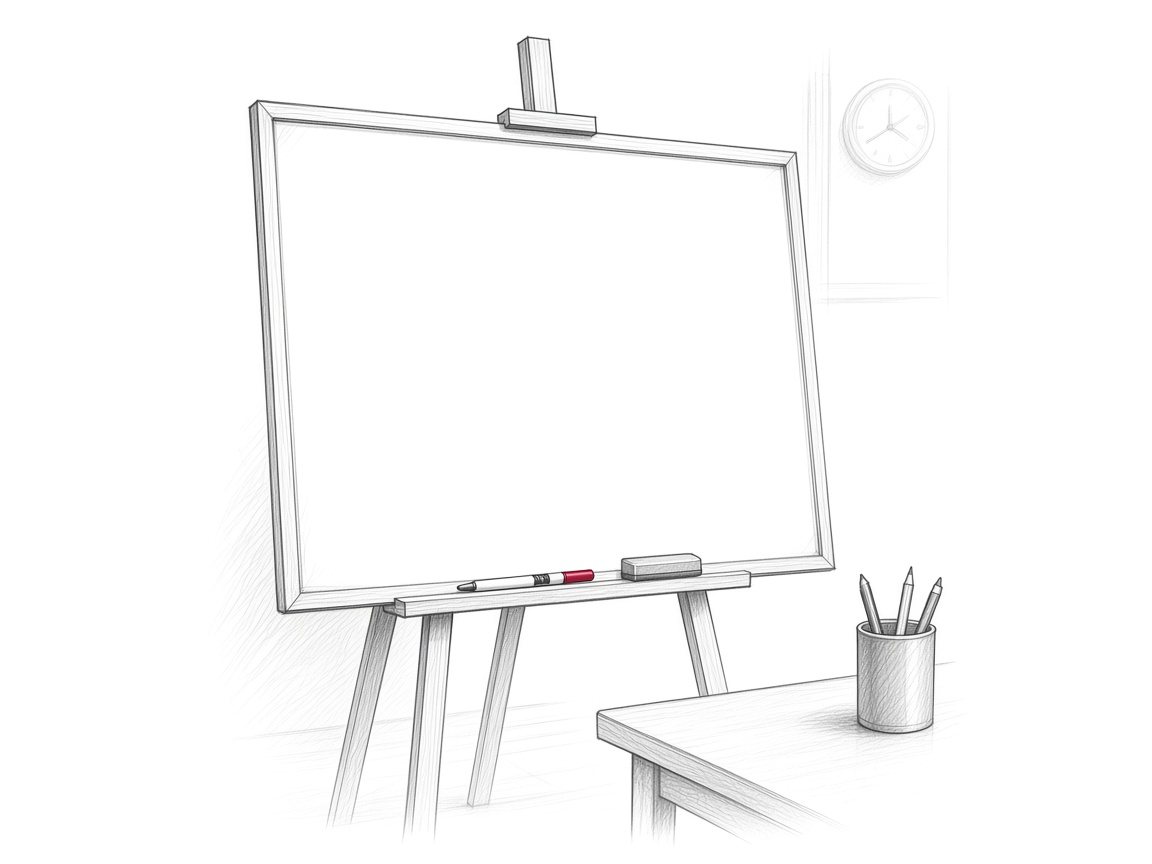
Of the five strategies, the third is the most counterintuitive. We tend to picture bravery as a single leap — quitting, going all in, betting everything. That's not what the leaders Gulati studied did. They probed with small steps first, kept a way back, and corrected course as they went.
Masuda's days at the Fukushima Daini plant are the most complete story in the article, and there isn't a single heroic big decision in it. What there is: a whiteboard, a few sets of numbers written down, a risky on-the-ground inspection, a hypothesis, and two changes of direction. The first plan — drawing power from the building that still had electricity — failed, so they switched to the generator; they judged another reactor to be in greater danger, so they moved people there. Every step was small enough to be corrected by the next. The Daiichi plant a few kilometers away faced the same tsunami.
Weick says sensemaking "is not about truth and getting it right; it is about continually rewriting an emerging story so that it becomes more comprehensive, incorporates more of the data, and is more resilient in the face of criticism." In my last piece I wrote about his old map — when you're lost, any map will do, because it gets people moving. This piece is the flip side of the same idea: once you're moving, each step should be small enough to walk back. Amazon calls it a two-way door.
Bold doesn't mean big. Bold means early — taking a step while others are still waiting for clarity; and reversible — if this step is wrong, you can come back. People who understand courage as big moves keep waiting for the moment "worth betting everything on," and that moment usually never comes; people who understand courage as small steps can start today.
My own take is that this also explains why so many smart people seem timid. It's not that they don't dare; it's that they treat every decision as a one-way door, applying one-way-door caution to two-way-door matters. And most decisions are, in fact, two-way doors.
There are no lone heroes; courage is a team sport
In our cultural narratives, courage is an individual quality — one person steps up, one person carries the weight. After interviewing hundreds of people, Gulati says that behind almost every brave leader stands a group of less visible supporters and a set of constructive critics.
The passage about Nair is beautifully written. When she was doubted, what she thought of wasn't her own résumé but the women in her family whose ambitions had been suppressed yet who had great faith in her — "Let Leena have that chance; she's smart, she's talented." She was borrowing other people's confidence in her. What her mentor Nooyi gave her wasn't encouragement either, but a specific reorientation: don't think about your limitations; think about what you can bring.
Then there are resources. Bajpai ran out of money four times, and each time there was bridge funding from investors; before Haugen released the documents, she had two organizations behind her. Money and people are a safety net — only when people have a way back can they afford the cost of moving forward. That's not weakness; it's physics.
Finally, the critics. You can't have only cheerleaders around you. The point of Knudstorp's "listen to the complainers" and Culp's shop-floor walks isn't humility — it's that a judgment others have tested and picked holes in is one you can act on with more conviction. Of the fifteen practices, I think accepting feedback is the hardest, because it means letting others judge a decision you're already afraid of. But what it buys you is exactly the confidence that decision needs.
This has big implications for organizations: if courage is a team sport, then an organization's courage can be designed, rather than depending solely on hiring brave people.
Organizational courage: the leader says it first and pays first, then lowers the cost for everyone else
My answer to the professor's third question: organizations become braver the same way individuals do — through the same five strategies — except that in an organization each strategy can become a system; and there's one thing the leader does that no one else can.
First, the systems. Risk hunting can be a risk map everyone can see, not a register only the legal team reads. Building confidence can be Taj-style 18-month onboarding — long enough that "guest first" becomes the default, not the exception. Taking small steps can be a decision taxonomy: which are two-way doors — fast, delegated, reversible; which are one-way doors — slow, senior, deliberate. Connection can be institutionalized dissent — transparent debate, going to the front line, listening to the complainers. Calm can mean treating rest as an operational necessity rather than a weakness. These are all things you can write into how an organization works.
Then, the leader. In the previous article, Gulati said that the cultural barrier of loss aversion can only be overcome by "explicitly cultivating courage as a cultural value, with leaders going first." Here, Foulkes's story spells out what "going first" means: the team debated for a long time, not everyone agreed, and the decision became a source of pride only after it had cost US$2 billion. A leader who asks others to be brave while taking no risk themselves is really asking for obedience.
And there's one more thing I think matters even more than "leading by example": lowering the cost of bravery for everyone. What most people in an organization fear isn't the market — it's the boss. Two-way doors, blameless post-mortems and visible safety nets make bold action cheap enough that ordinary people are willing to take it. Masuda didn't tell his team to "stay calm"; he gave them data they could write down.
This is also how the unit's three cases fit together. Cynthia Carroll is the entire playbook embodied in one person — a moral purpose, a visible cost, allies and critics; Roaring Out of Recession is about what progressive companies do; this piece is about how the people inside those companies find the nerve.
Most of us are too timid, not too reckless
In Book III of the Nicomachean Ethics, Aristotle places courage between two vices: cowardice at one end, recklessness at the other, with courage as the mean. More than two thousand years later, after hundreds of interviews, Gulati adds an empirical judgment: the mean is the mean, but most people lean toward the cowardly side.
That sentence is worth reading aloud to yourself. Well-trained people are especially prone to treating caution as the whole of virtue — one more set of data, one more quarter of waiting, one more round of opinions. Each step on its own is right. Put together, they make a person who never moves. And the article is blunt: this is not to say leaders should take excessive risks, "but most of us tend to be too timid rather than too reckless."
So for people like us, "be a bit more careful" is most likely not the right correction.
Back to the professor's first question — what does courage mean to me? In my own early writing, three words kept coming up: brave, caring, earnest. Having read this, I'd change the order. Caring comes first — it determines what is worth paying a price for; bravery is what you do for the things you care about. My one-sentence answer: courage is paying a real price, while you're still afraid, for something you've decided is worthwhile.
As for how to practice it, I reordered the fifteen practices from easiest to start with to hardest: first look after your body, then list what you're afraid of, then state your purpose, then work on your craft, then focus on what you can control, then take small steps through two-way doors, and finally build a team with allies, resources and critics. The easiest is the first — and it's also the one most leaders skip.
Takeaways for Arcus42
Reading this, I thought of what we do every day — accompanying a family through its uncertain decisions — and of how we make decisions ourselves as a young company.
First, hunting for risks on a family's behalf is one of our core deliverables, and we should describe it that way. When a family hesitates over succession, structure or allocation, it's often not because the risk is large but because they don't know what they're afraid of. Turn "not knowing what you're afraid of" into a list you can work through item by item, and the fear shrinks by half — which is exactly what Aladdin did for Fink. Our diagnostics and profiles are essentially this.
Second, calculate everything you can before talking about courage. Knight's line applies to a family just as it does to a company. Things with calculable probabilities are solved with analysis; only once the analysis runs out does the part that needs courage begin. You can't cut corners on either side: using "courage" to skip analysis you should have done is reckless; using "one more round of analysis" to delay a decision you should make is timid.
Third, sort decisions into two-way and one-way doors, and handle them at different speeds. That goes for families and for us. A new tool, a new content column, a one-off partnership — these are two-way doors: move fast, retreat fast if wrong. Licenses, equity structure, key partners — these are one-way doors: slow and deliberate. Most decisions are actually two-way doors, yet we often make them at one-way-door speed.
Fourth, keep a critic around who won't go easy on you. Allies and resources are relatively easy to find; "complainers worth listening to" are the hardest to find and the most useful. A judgment that's had holes picked in it is one you can act on with more conviction. It's worth regularly inviting one or two people whose job is to pick holes in our strategy and narrative.
Fifth, the founder's pace is the company's pace. Nair's "put on your own oxygen mask first" is addressed to every founder. A small company's tank is the founder's tank; when it runs dry, the organization freezes by default. This one belongs at the front of the five strategies, not the back.
Sixth, courage has to be voiced by the founder first, and paid for with a concrete decision. "We can be brave" only goes from slogan to precedent once it's been backed, in the tightest quarter, by money invested anyway and a client turned down anyway. Only then has it earned the right to be asked of others.
In Closing
Before class, the line I agreed with most was: "most of us tend to be too timid rather than too reckless."
These are pre-class reading notes based on the assigned Harvard course readings. All data and quotations are from the original text and do not constitute an evaluation of, or advice regarding, any company or individual.