
HBS Notes · HBS Prep
Leadership Case: Cynthia Carroll at Anglo American
When everything has been said, only a decision that costs you something is believed, even shutting down your own mine
ClassWed, Oct 14 11:00–12:30 (Boston time) · Leadership · Jeff Polzer · Prep materials

Contents4 sections
The third case of Unit 3 moves over to Professor Jeff Polzer's Leadership course, and the reading is Cynthia Carroll at Anglo American (A).
Olay was the story of a brand taking itself apart; Belden was a company rebuilding itself just when its numbers looked best. Carroll's story is harder-edged — a CEO four months into the job, sitting in a helicopter, hears that a 29th person that year has died in her mines, and then has to decide whether to do something no one in the industry has ever done.
I wrote this before class. I'm putting my judgement down here first, and I'll come back to check it against the discussion afterwards.
Here goes — enjoy:
Case Summary
On June 27, 2007, Cynthia Carroll flew back to Johannesburg from the platinum mines at Rustenburg, South Africa. When she landed, Ralph Havenstein, CEO of Anglo American Platinum, pulled her aside: "I have some bad news. Another person has died."
It was the 29th that year. From 2002 to 2006, an average of 46 Anglo American miners a year were killed in accidents. In the previous few weeks, five people had died in three accidents at Rustenburg alone — three buried by an inrush of mud, one thrown from a conveyor belt, one struck by a blasting barricade. And the case goes out of its way to add one line: Anglo's South African mines were no worse than those of other South African mining companies, and their safety had been improving noticeably in recent years.
Where Anglo American came from: founded in South Africa in 1917 by Ernest Oppenheimer, with J.P. Morgan among its backers, it got its start in gold, diamonds and platinum. Economic sanctions and exchange controls during apartheid forced it to buy up a pile of unrelated businesses at home — steel, timber, consumer goods — and by the 1990s it controlled roughly a quarter of the market value of the South African stock exchange. In 1999 it moved its headquarters and primary listing to London. By the end of 2006 it was the world's fourth-largest mining company by market value, with revenue of nearly US$25 billion and 162,000 employees, two-thirds of them in South Africa. Forty percent of the world's platinum came from here.
Who Carroll is: a geologist by training, she worked as a petroleum geologist at Amoco, then joined Alcan after graduating from Harvard Business School in 1989. The case goes into her three stints at Alcan in detail:
She took over a foil plant with US$29 million in annual revenue. A major customer responsible for a third of its profit wanted to cut its four suppliers down to one, and it was closer to another supplier. Her team said, "Nothing we can do — let's find other business." She said "No way" — and within two years she had quadrupled output and won the exclusive contract. Four years later the plant's revenue was US$79 million, and a year after that US$105 million.
When she ran an alumina refinery in Ireland, new EU and Irish environmental tax rules threatened the plant's survival, and the company's lawyers said a public fight like that could not be won. Eight months pregnant, she was on the front pages of the newspapers every day — "People threatened me; everyone said all we could do was go along with it" — and in the end she turned the whole thing around.
From 2002 she ran Alcan's primary metal group, which made up 75% of the company's operating income; it posted the highest profits in the company's history, and lost-time injuries improved by more than 80%.
She once summed herself up this way:
"You do what you believe in. You can be influenced in all sorts of ways, but if you think it's right — even if you're the only one who sees it that way — in the end, you do it."
How she came to Anglo: at Davos in 2006, she saw a silver-haired man eating breakfast alone and asked whether she could join him. He was Mark Moody-Stuart, chairman of Anglo American. They talked about geology, Oman, South Africa and AIDS. Later, when Anglo went looking for a CEO, her name appeared on the shortlist. After meeting her, board member Mamphela Ramphele said: "Before I met her, I worried she wouldn't be tough enough to handle our environment. She is tough enough." In March 2007 she became the first non–South African and the first woman to be CEO of the 90-year-old company.
What she inherited: a federation. Each business unit ran its own show. In Australia she asked the heads of the mining businesses how often they met, and was told: "We don't meet." One executive described it like this: "The heads of the businesses are like tribal chiefs. Ask them to do something on safety or talent and they'll tell you to get lost." In a commodity bull market, the share price had lagged BHP and the sector. Citigroup estimated the company could cut US$560 million to US$1.1 billion in costs. The board gave her one more assignment: repair a strained relationship with the South African government. As for safety, the board's exact words were: "It has already improved, but you might want to pay attention to it."
The South African context: apartheid was legislated in 1948 and ended only in 1994. Mining had always meant white men managing and Black men going underground. Over more than a century, the mines evolved a language called Fanagalo — simplified Zulu and Xhosa mixed with English, Dutch and Portuguese, about 2,000 words, most of them commands. A Black South African told Moody-Stuart: "Mark, you have to understand, this language is fundamentally in the imperative. The conversation goes one way — from supervisor to worker." Someone at the union Solidarity described Anglo Platinum's management style as "strongly hierarchical, autocratic. Employees cannot question management's decisions. When a general manager comes back from the mine, all he talks about are financial and production targets. The human factor is almost never mentioned."
On safety: Moody-Stuart said that great progress had already been made in reducing risk through technology; what remained were "low-tech accidents" — and the prevailing attitude in South Africa at the time was: "The people who got hurt took shortcuts and broke the rules; they were stupid. That's just how it is." On her first tour after taking over, Carroll talked to one executive about "zero harm," and he replied: "Cynthia, that won't happen in our lifetime." Another executive said the industry saw mining as "a man's undertaking, like going to war."
The numbers: between 1900 and 1993, 69,000 miners died in South African mining accidents. In 1996, 463 died, and the government passed the Mine Health and Safety Act, whose Section 54 gave inspectors the power to shut mines down. In 2003 the industry held a summit and pledged to cut deaths by 20% a year — by 2007 it was 20% to 25% behind that target. When Carroll took office, a miner in South Africa died in a workplace accident every 44 hours.
Rustenburg: the highest-risk of Anglo Platinum's seven mines. Nine shafts, up to 1.5 kilometres deep, extending another three to four kilometres horizontally — workers at the rock face could be as far as 5.5 kilometres from the surface. The ore reef was only a metre thick, so workers spent their days in a space a metre high. One tonne of ore yields 3 grams of platinum; a single platinum ring takes 280 tonnes of rock. 30,000 workers, with an illiteracy rate of about 70%. It generated around US$8 million in revenue a day and 35% of Anglo Platinum's steady-state profit — and Anglo Platinum in turn made up 23% of the group's operating profit. In the first seven months of 2007, 16 of Anglo's 29 deaths happened here. The exhibits contain an even more uncomfortable number: Rustenburg's lost-time injury rate rose from 1.84 in 2006 to 2.28 in 2007.
Senior management was already "on board"; the resistance was in the middle. "The people most resistant to change are our front-line supervisors."
There is one more technical detail, and it is the strongest argument against shutting the mine: once a deep shaft sits idle, it can actually become more dangerous — the rock keeps shifting even when no one is watching it.
Carroll's reaction: "This organisation is out of control. I will not support operations that are killing people." She was even considering shutting the mine — something no company in the industry had ever done. The case stops there. The professor gave us two questions:
- What should she do about the safety problem at Rustenburg?
- To achieve "zero harm" across all 160,000 people at Anglo American, taking every stakeholder into account, what should she do?
My Thinking
The most dangerous kind of "normal" is the kind no one has tested in ninety years
The most unsettling thing in the case isn't the number 29. It's the line "Anglo was no worse than other South African mining companies."
That line is true. It is also the whole problem. When something happens every day and goes on for ninety years — 69,000 people — it stops looking like a decision and starts looking like geology. No one "decided" to let miners die; everyone simply accepted a baseline and then worked hard to improve on it. The 2003 summit was exactly that kind of effort: cut deaths 20% a year. It sounds ambitious, but its premise is that the people who died this year are the starting point.
To accept the baseline is to accept the deaths that come with it.
And the counter-evidence was always just outside the room. Mines in Australia, Canada and the United States have far lower death rates. Same mining, same rock, same gravity. The executive who said "not in our lifetime" wasn't lying; he had just never been asked to test that judgement — and for ninety years no one had asked.
My own reading is that a leader's first move often isn't to set a new target, but to take something that has been treated as "geology" and turn it back into a "decision." That is exactly what Carroll did: she refused to accept "no worse than our peers" as the starting point.
When everything has been said, only a decision that costs you something is believed
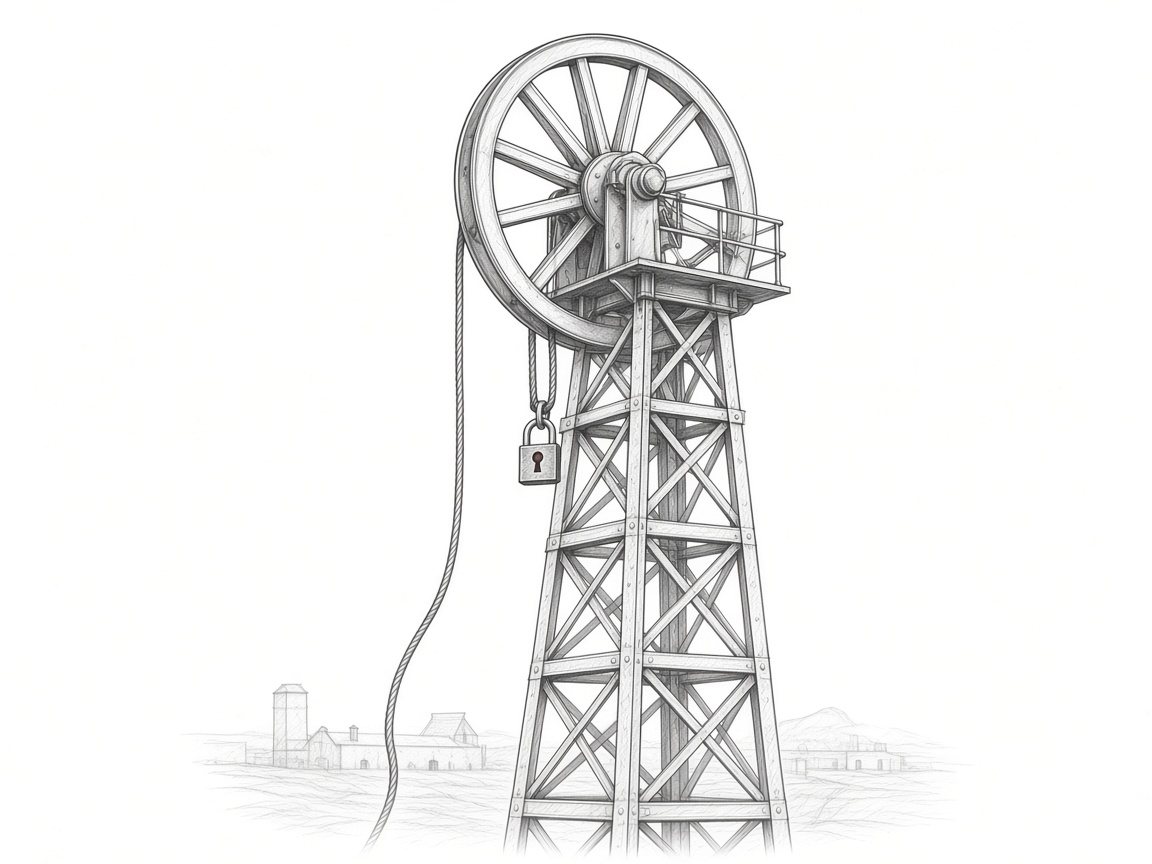
My answer to the first question: stop. Shut all nine shafts, now — and shut them herself.
The reasoning isn't complicated. Every gentle approach had already been tried. The processes were in place, the board said; the attitude wasn't, the board also said. The industry had made a pledge and missed it. At the shareholders' meeting in April she had already said "these deaths and injuries are unacceptable," and two months later several more people had died. A CEO four months into the job giving one more speech would just be adding one more sentence in a language that only speaks downward.
Shutting the mine is different. Rustenburg brings in US$8 million a day, its fixed costs are high, and the losses from stopping "fall straight to the bottom line." Roughly US$56 million a week, about US$240 million a month — given that Rustenburg is 35% of Platinum's profit and Platinum is 23% of the group's, a one-month shutdown works out to roughly 2.4% of the group's annual operating profit. It hurts, but it won't kill you.
Only a decision that costs money gets believed — it turns "unacceptable" from an adjective into a number everyone understands.
There is also a very practical reason: if she doesn't stop it, the government can. That is exactly what Section 54 of the Mine Health and Safety Act is for. A CEO who shuts her own mine holds the narrative; a CEO whose mine is shut by an inspector is just like every other South African mining company.
A shutdown isn't the end of a decision; it's the start of a test
But if shutting the mine is only a shutdown, it is just an expensive silence. The case lays out the arguments against it honestly, and I think every one of them has to be taken seriously.
An idle deep shaft can be more dangerous. So the shutdown has to be short and planned, with core crews kept on for ventilation, drainage and support inspections, and production restarted one shaft at a time, each one signed off against a written standard.
30,000 workers, 70% illiterate, many of them migrant workers paid by the shift. A shutdown without wages is a strike you've called on yourself. The answer on pay has to be ready before the announcement.
Havenstein runs a company that is controlled by the group but separately listed. Overruling him four months into the job carries a governance cost. So the sequence should be: tell him first, insist on the outcome, let him carry it out — but the public words must be hers.
Then comes the most important point: what the shutdown time is used for. Everyone gets retrained, supervisors first — because the supervisors are both the resistance and the bottleneck. And write down in advance what "the shutdown worked" looks like: months of zero deaths after restart, the lost-time injury rate back below 2006 levels, supervisor turnover, whether conversations have become two-way. Let the numbers say whether this was the right call, not loyalty.
My own inclination is that, in the same breath as announcing the shutdown, she should spell out all the costs herself first: output, shareholders, Havenstein's authority, the supervisors who might wait for the storm to blow over. A leader who names the costs before her critics do is much harder to argue with.
A shock changes attention; it doesn't change the language
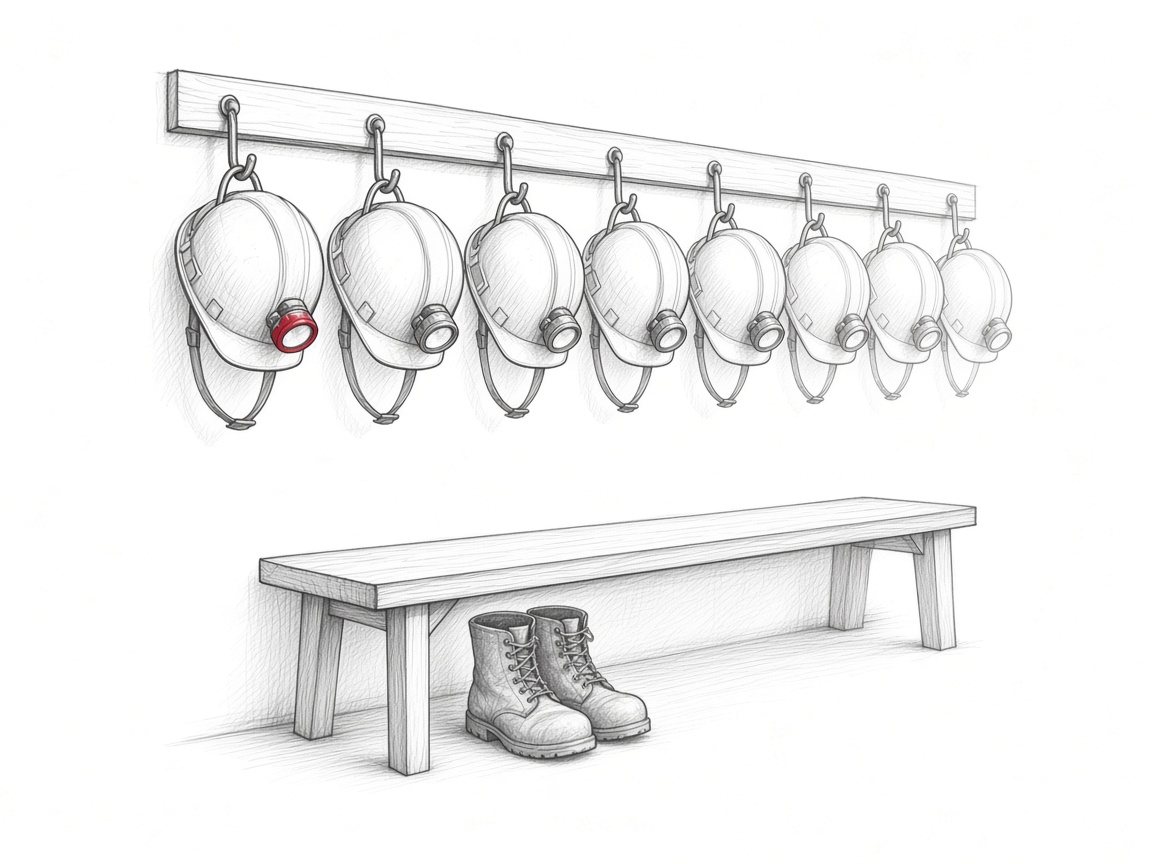
If I had to pick one detail from the whole case, it would be Fanagalo.
2,000 words, most of them commands, "fundamentally in the imperative." For a hundred years, South Africa's mines ran on this language. It is very efficient — which is precisely the problem. A language that can only carry commands can't carry a question. When a worker sees a crack in the hanging wall, how does he say in Fanagalo, "I don't think it's safe here — can we stop for a moment?"
Moody-Stuart said something I think is the key to the whole case: "Build trust among all the parties, and safety will take care of itself." Technology can solve the high-tech deaths — support, ventilation, monitoring. Behind each of the low-tech deaths that remain — the mud inrush, the conveyor belt, the blasting barricade — is a judgement that was never spoken, or was spoken and no one listened.
So the real work after the shutdown is to turn the language around. Give every worker the right to refuse unsafe work, protected from retaliation, and require supervisors to report how many times that right was used — if the number is zero, the right doesn't exist. Train people in their own language: two-thirds of Rustenburg speaks Setswana, not Fanagalo. Add leading indicators to supervisors' evaluations: how many near-misses were reported, whether stop-work calls were respected.
The case even contains ready-made proof that this workforce can trust the company: Anglo was the first major employer in Africa to provide free antiretroviral treatment to its employees, and 110,000 people volunteered to be tested. When the company acts first, and visibly, workers believe it. Safety can borrow that trust — and should borrow the method.
Zero harm isn't a forecast; it's a stance
"Cynthia, that won't happen in our lifetime."
I read that line several times. The person who said it was most likely sincere, and on the data he may well have been right. But another executive in the case added something more worth remembering: "You cannot publicly say that any target less than zero harm is acceptable — whether or not it can be achieved."
The point of zero isn't whether it can be reached; it's that the moment you accept any non-zero number, you have said how many deaths are OK.
That is the difference between a target and a stance. A target can be negotiated, phased in, "cut 20% this year." A stance can't. Carroll's approach — "everyone has the same right to finish a day's work and go home to their family" — is a stance, not a KPI. With one sentence, she is tearing down the ceiling.
My own reading is that much of a leader's job is precisely to hold an "impossible" zero. Not out of naivety, but because the moment you give ground on zero, every layer of the organisation gives a little more ground below you.
Turn the people who can stop you into people watching the same number as you
On the second question — how to reach zero harm across 160,000 people in 40 countries — my answer is a sequence.
Structure first, mobilisation second. Anglo is a federation, and the "tribal chiefs" don't meet. There can be no zero harm in a federation. So step one: one safety standard for the whole group, with "fatal risk standards" set for the handful of things that actually kill people — local rules can be stricter, never looser; get the business-unit CEOs into a room every quarter, each reporting their own numbers to their peers — public comparison does what memos can't; and tie her own pay and every business-unit CEO's pay to safety outcomes, not as a small modifier but as a gate. Then replace the first person who doesn't comply and shrugs it off. One visible departure beats ten speeches.
Next come her two hardest groups: the unions and the government. They are the ones who can stop her — strikes, and Section 54. And the reason the 2003 summit fell short was that it was a pledge from companies to companies, with no third party keeping watch. Bring the unions and the Department of Minerals in to write the standard together — one target, one scoreboard, published together — and the people who can stop you become people who own the same number as you. Incidentally, the government's own pension fund, the PIC, is also an Anglo shareholder.
Finally, the shareholders. Three kinds of them — long-standing South African shareholders who want dividends, London institutions holding it because it's in the FTSE 100, and international investors seeking emerging-market exposure — and not one of them will applaud lost output. Her argument has to be made in the same sentence every time: "Performance follows safety." Then prove it: every death means a stoppage, an investigation, a Section 54 risk, a supervisor lost in a hot labour market, and a question about the licence to operate in a country that already distrusts the industry. Put safety and financials on the same sheet and report them together every quarter.
She also has something no one else has: first non–South African, first woman, four months in — she has no history to defend. That lets everyone say "she doesn't understand mining," and it also lets her say things this industry has never said to itself.
Takeaways for Arcus42
Reading Carroll, what came to mind wasn't mining but the word "normal."
First, every industry has its own "no worse than our peers." In mining, it's dozens of deaths a year; in wealth management, it's advice driven by product commissions, accounts that don't know about each other, fees layered on fees. These things have gone on so long they look like geology rather than decisions. The biggest temptation for a new firm is to "improve" on this baseline — a bit more transparent than the peers, a bit cheaper. Carroll's reminder: to accept the baseline is to accept everything that comes with it.
Second, a stance needs a visible cost, or it's just a slogan. Shutting the mine at US$8 million a day turned "unacceptable" into a number. For any firm that says it is "on the client's side," the same question applies: what have you given up for that stance, can you put a figure on it, and do you dare tell the client? A promise with no price attached is taken seriously by no one — including the person who made it.
Third, zero is a stance; the exception is the ceiling. The value of "zero harm" lies not in whether it can be achieved but in the fact that it leaves no room to give ground. Conflicts of interest work the same way: make one exception for one deal, and every layer of the organisation gives a little more ground below. The zeros worth holding must be held as non-negotiable.
Fourth, look at the layer with the most resistance. At Anglo, senior management was already on board and the workers at the rock face had no voice; where the culture actually lived was among front-line supervisors. Whenever an organisation needs to change, first ask: who least wants to change, and holds day-to-day power? The answer is usually neither in the boardroom nor at the very bottom.
Fifth, the test of a culture is whether conversation has become two-way. The problem with Fanagalo isn't that it's crude; it's that it can only speak downward. Is the way a service firm talks to families — plans, recommendations, "you should" — also in the imperative? The real test is simple: have our clients ever taught us something back, and did we write it down?
Sixth, bring the people who can veto you to the same scoreboard. Carroll had to face the unions and the government; a family office has to face the other members of the family, the family's lawyers and accountants, the incumbent banks. They can block you. Rather than wait for them to block you, let them look at the same numbers you do — the same asset map, the same risk list. The lesson of the 2003 summit: a promise you make to yourself, with no one watching, will fall through.
Final Thoughts
Before class, the line I agree with most is "Build trust among all the parties, and safety will take care of itself."
After class, I'll see which of these got overturned, and by what.