
HBS Notes · HBS Prep
Finance: GeBBS
Who takes the helm after you sell the equity
ClassFri, Oct 23 09:00–10:30 (Boston time) · Finance · Martin Sinozich · Prep materials

Contents4 sections
Unit 3, Professor Martin Sinozich's Finance, GeBBS Healthcare Solutions: Did You Ever Have to Make Up Your Mind?.
This is the story of a founder walking into a sale process for the third time. The two offers are very close, yet they lead him, his family and his team towards different futures.
Here goes — enjoy:
Case Summary
Nitin Thakor saw the rise and fall of a family business early on. His father ran a computer monitor business, which later closed. In 1997 he founded GeBBS Consulting in the US, handing American software development projects to teams in India to execute. The company reached US$20 million in revenue at one point; after the dot-com bubble burst, client demand slowed. He cut costs, returned the company to profitability, and started rethinking how his next company should be built.
His reflections were concrete: he had taken on clients without clear industry boundaries, lacked intellectual property of his own, and competed mainly on price. In 2005 he and his father founded GeBBS Healthcare, focusing the business on back-office services for US healthcare. Hospitals have to deal with different insurers' rules, medical coding, billing and denial appeals — work that affects revenue and requires specialist knowledge. GeBBS provided these services with skilled professionals in India, starting as a subcontractor to large outsourcing firms and gradually serving hospitals directly.
The company also kept options open for clients. Technology systems, workflows and delivery locations could all be adapted to the client. For clients wary of offshore delivery, a US team served them first, and once trust was built, part of the work was moved overseas. This FlexSource model lowered the barrier to a first engagement. Once inside a client, the company gradually expanded the scope of its services.
In 2010 GeBBS had revenue of about US$8 million and EBITDA of about US$2.8 million, and received a US$20 million acquisition offer. The deal fell apart at the final stage. By 2012 revenue had grown to US$11.6 million, and Thakor invited investment banks to pitch for a sale. The bankers' feedback was remarkably consistent: the management team wasn't strong enough, there was no differentiated technology, no marquee direct clients, the service relied too heavily on labour-cost arbitrage, and the company depended too much on the founder himself. The valuation expectation at the time was about US$30 million.
He decided to keep investing. At the end of 2013, Milind Godbole — MG — joined to run the India business. He came from a much larger company, and agreed to come on two important conditions: his equity would vest within about five years, and the founder would genuinely delegate. The company then filled out its sales and operations teams, developed the iCode technology platform co-designed with clients, and won hospital-system clients such as Memorial Sloan Kettering and Johns Hopkins. By FY2018 revenue had reached US$49.3 million, with adjusted EBITDA of about US$10.76 million; the share of revenue from direct clients rose from 31.5% in FY2015 to 58.3%.
The third sale process reached out to 185 potential buyers and received 17 preliminary indications of interest. By November 2018 the choice had narrowed to two. Thakor had been building and running companies for thirteen straight years, and most of the family's wealth was still in the company; the team wanted to take the company to US$300 million in revenue. He had to decide, all at once, how much the family should cash out, who the company needed for its next stage, and how much power he was willing to hand over.
- Regimental Technologies: an enterprise value offer of US$150 million for the whole company, aiming to acquire 100%. Of this, US$120 million would be paid at closing, and the other US$30 million depended on revenue and profit targets over the next three years.
- ChrysCapital: an enterprise value offer of US$145 million for the whole company, acquiring up to 80% of the equity, with the founding family retaining a minority stake and continuing to take part in running the business and in the next exit.
- Stay independent: keep 100% of the equity and current control, and bear the investment for future growth, operating risk and the uncertainty of another sale on their own.
My Thinking
The low valuation in 2012 handed the company its to-do list
The five problems the bankers raised all point to the same thing: whether the company could turn the business it already had into a capability that keeps running after a buyer takes over.
Profit belongs to the current period; valuation also depends on whether that profit can be sustained. When a company's clients, delivery, sales and product decisions are all tightly bound to the founder, the buyer has to bear the risk of that key person leaving. Clean books are certainly valuable, but they aren't enough to remove that dependence.
After Thakor brought in MG, the truly hard move was pulling his own hands back from day-to-day operations. He used to go to India six times a year to manage the business; later he had to give the new leader room. A manager's ability only becomes the company's ability once it enters real decision-making.
My own take is that preparing for a sale can be a very useful organisational check-up. Put yourself in the buyer's shoes for a while and look: why do clients stay, what does the team base its decisions on, and what would happen if the founder were away for a month?
The quality of revenue changed, and growth got a new explanation
GeBBS's transformation isn't just revenue growing from US$11.6 million to US$49.3 million.
From FY2017 to FY2018, direct client revenue rose from about US$14.1 million to US$28.8 million, while channel revenue fell from about US$21.2 million to US$20.6 million. The growth in this period came mainly from expanding direct client relationships. The company got closer to its clients' problems, and had more opportunity to provide multiple services.
The way iCode was developed is also worth noting. The company had earlier tried to develop its own technology, without much success; later it insisted on having clients take part in development, using software to solve specific work problems. Once technology becomes part of the service process, the client relationship has a chance to move gradually from buying cheap labour to jointly improving the business.
But this still doesn't make GeBBS a software company. It still needs a lot of people to deliver, and channel partners may become competitors of its direct sales. FY2018 gross margin was about 42.2%, against a US healthcare IT industry benchmark of about 51.6% given in the case. This shows technology has brought differentiation, and also reminds us that in valuation we still have to take its cost of service seriously.
Break each offer into the money you can get and the risk you still carry
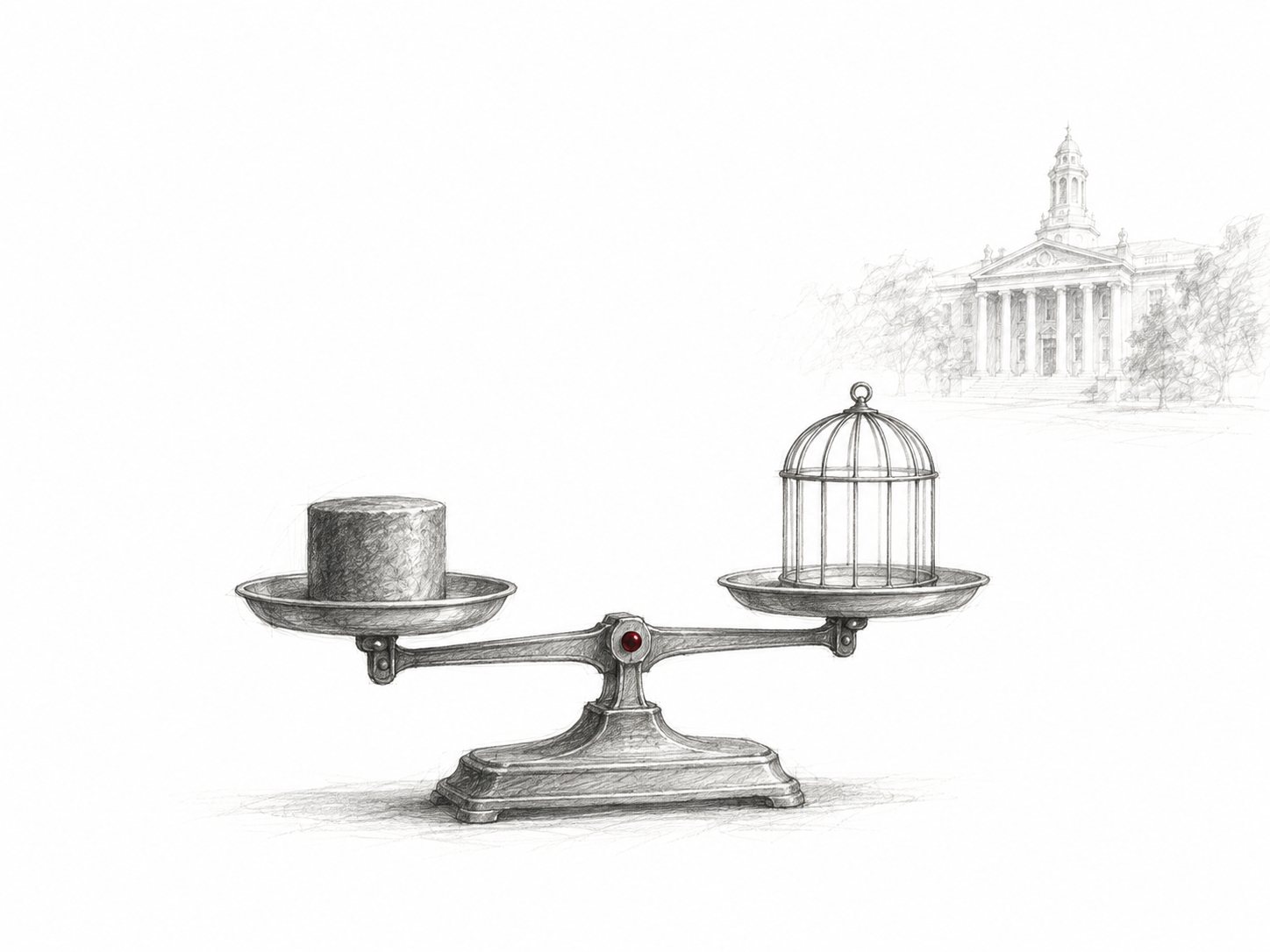
US$150 million versus US$145 million — a difference of just US$5 million. The real difference lies in the terms.
Regimental's US$30 million earn-out is paid out over three years based on performance. After negotiation, the schedule was moved from back-loaded to front-loaded: US$15 million, US$7.5 million and US$7.5 million. Even assuming all of it is achieved, using a 12% discount rate purely for classroom calculation and assuming payment at the end of each year, this portion has a present value of only about US$24.71 million, or about US$144.7 million together with the upfront payment; in reality you'd also have to factor in hitting the targets, escrow, claims and taxes.
The operating authority you keep after a sale affects how much of the sale price you actually end up realising. If headquarters changes budgets, staffing, client arrangements or cost allocations, the original team may still carry responsibility for the numbers without the decision rights it used to have. This was exactly MG's concern.
ChrysCapital's US$145 million is the enterprise value of the whole company. In a simplified scenario — zero net debt, working capital delivered as agreed, ignoring adjustments such as an incentive pool — selling 80% corresponds to consideration of about US$116 million, and the retained 20% is worth about US$29 million on the same basis. The latter is still risky equity with no immediate liquidity; it can't be treated like a bank deposit.
The two arrangements leave the founder holding risk in different ways: one is payment tied to future performance, the other is continuing to own equity in the company. What needs comparing is the size and duration of each risk, and how much he himself can influence it.
A fair valuation needs growth, and also needs the profit to come back as cash
Based on the last-twelve-months adjusted EBITDA of US$12.1 million in the case's term sheet, the two offers come to about 12.4x and 12.0x. Using the earlier FY2018 adjusted EBITDA, they come to about 13.9x and 13.5x. A different denominator makes the offers look different.
This company has real growth and has been through multiple rounds of market bidding, so both offers have a reasonable basis. Still, growth is absorbing cash. FY2018 adjusted EBITDA was about US$10.8 million; after deducting the increase in working capital and capital expenditure, the pre-tax cash flow listed in the case was only about US$4.8 million.
The future profit in a valuation has to make it through collections, reinvestment and taxes before it becomes distributable cash. When revenue grows quickly, receivables can also grow quickly. Simply multiplying profit by a multiple misses this tied-up capital.
My own judgement is that both offers are in a range worth closing at, but that doesn't mean the company has one precise fair price. Whether you believe in the next stage of growth, how much reinvestment it needs, and at what risk rate future cash should be discounted all change the answer.
I lean towards the PE option, while acknowledging that control has passed
What attracts me about ChrysCapital is that it fits fairly well with what the company needs next: industry experience, operating partners, a healthcare network, and a track record of taking businesses to a larger scale. MG had already worked with it, and the way the two sides got along during negotiations offers a bit of a reference too.
For the family, cashing out most of its holding reduces excessive concentration of wealth; for the team, retaining a minority stake still gives a chance to share in future growth. My pre-class choice is to sell 80% to ChrysCapital, and to write management authority and minority shareholder protections into the agreement.
This choice has a clear cost. On the seven-person board, ChrysCapital holds four seats, Thakor two, plus one independent director. The chairman title won't change who holds the majority of seats. Continuing to take part in running the business has to be made concrete in specific rules on budgets, personnel, acquisitions, financing and exit.
The financing terms also need checking. The body of the case describes the PE option as a debt-free deal, but the exhibits list US$35 million of borrowing, and suggest it could be held by the buyer's holding company and repaid with dividends the buyer receives. Their impact on the company's cash and the family's equity needs to be clarified before signing. Summing it up with the word "debt-free" would hide an important difference.
Staying independent is attractive too, but the family's concentration risk, the founder's fatigue, management's equity vesting and the capability gaps for the next stage won't disappear automatically as revenue grows. Keeping all the equity is also a choice that comes at a cost.
Takeaways for Arcus42
First separate the family's life goals from the business's growth goals. That the business still has room to grow doesn't mean the family must keep the vast majority of its wealth in it. When discussing an exit, you need to look at future opportunities, the degree of wealth concentration, and the time the family wants to have, all at once.
Gradually turn key people's judgement into capability that can be passed on. Client trust, work records, team roles and decision processes need to support others in picking up the work. A founder's value also includes keeping the organisation's quality up when they aren't in the room.
Technology investment needs specific users and specific problems. GeBBS's approach of co-developing tools with clients is very instructive for professional services. First understand the difficulties in real work, then judge which steps are suited to standardisation and which still need human judgement.
When discussing a partnership, pin power down to specific matters. Shareholding, board seats and titles provide the outline; rules on budgets, personnel, data, financing and exit determine how the partnership actually works. Both sides should be clear about what they can decide, and how disagreements will be handled when they arise.
Translate every offer back into time and conditions. Payment at closing, deferred payments, incentive equity and retained equity each pay out differently. Only by taking them apart can a family see which risks it still carries after the deal.
Before Class
My pre-class vote goes to ChrysCapital: cash out most of the family's holding, keep a stake in the next stage of growth, and accept that majority control has been handed over.
The judgement I'm bringing to class: choosing a buyer is also choosing how you will work and live in your next stage.
This piece is a pre-class discussion based on HBS case 820-041 and its exhibits; historical figures, forecasts and deal terms all refer to the case setting, and the analysis does not use the outcome of any later transaction. Calculations are classroom exercises, not investment, legal or tax advice.